
Kratom Science: Alkaloids — Research — and Honest Comparisons
This section covers what research actually says about kratom — its alkaloids, its pharmacology in plain language, and honest comparisons with other botanicals. The organizing principle is disclosure of certainty. Every claim here is labeled by how well it is studied: well established, emerging, or not yet studied. That labeling is the difference between a science section and a marketing section. Begin with the plant overview in what kratom is.
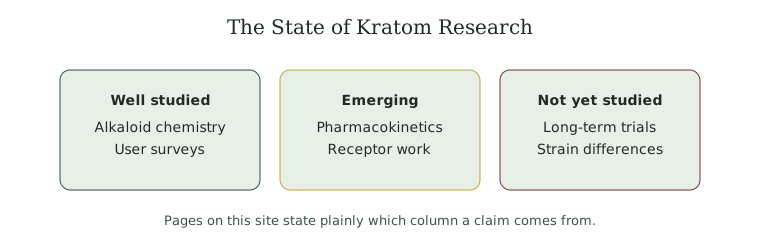
The State of Kratom Research
Kratom research is uneven, and honesty requires saying so. Alkaloid chemistry is well characterized. User-survey data is substantial, including large samples published by academic groups. Human pharmacokinetic work is emerging. Long-term controlled trials and rigorous strain-difference studies largely do not exist yet. When this site reports an effect, it names the column that evidence comes from — never dressing a survey up as a clinical finding. For a purely factual example, see the per-gram breakdown in kratom nutrition facts.
Start With the Chemistry
One page anchors this section: mitragynine and kratom alkaloids. It explains the alkaloid roster, why mitragynine percentage is the only measurable potency metric, and how 7-hydroxymitragynine differs in amount and behavior. Read it before any strain or extract page, because it turns marketing numbers into chemistry you can check on a certificate of analysis.
Honest Botanical Comparisons
Consumers compare kratom to other plants, so this section does too — carefully. The comparison pages set two botanicals side by side on plant family, active compounds, legal status, and reported character:
- kratom vs kava compared — two different plants often served at the same bars.
- kratom and caffeine together — same plant family, different chemistry.
Growing and Supply
Science includes where the leaf comes from. how kratom is grown covers native habitat, the Indonesian supply chain, and the reality of growing kratom outside the tropics. Supply matters to consumers because export conditions affect price, freshness, and testing — a link the section makes explicit.
Reading Pharmacology Without a Degree
Pharmacology intimidates consumers, and it does not have to. The alkaloids page translates the technical vocabulary into plain terms: what a partial agonist is, why concentration matters more than strain name, and how a lab measures potency. The goal is a reader who can look at a certificate of analysis and understand the mitragynine percentage line. That single skill turns marketing numbers into chemistry, and it is why the chemistry page anchors every strain and extract discussion on the site.
The Standard Behind Every Claim
One standard governs every page in this section: report what is measured, label what is merely reported, and name what is unknown. That standard is unglamorous and occasionally disappointing, because it refuses to promise more than the evidence supports. It is also the reason a reader can trust the science section when it does state something plainly. Confidence and caution are both information. A page that knows the difference between a clinical finding and a survey result, and tells you which it is holding, has already done the hardest and most valuable part of the job.
How to Use This Section
Use the science section as a fact-checking layer for the rest of the site. Before believing an effect claim anywhere, trace it here and see how well it is studied. Before paying for a "stronger" strain, read the alkaloids page and learn that potency is a measured percentage, not a name. Before combining kratom with another botanical, read the relevant comparison for what is known and what is not. The science section exists to make you a harder consumer to mislead, one checked claim at a time.
Where the Evidence Runs Out
An honest science section marks its own edges. Long-term safety data is thin. Controlled human trials on specific effects are rare. Strain-difference claims rest almost entirely on surveys, not laboratory comparison. Naming these gaps is not a weakness of the coverage; it is the coverage. A vendor page fills silence with confident claims. A consumer resource fills the same silence with "this has not been studied," and then cites what has.
Citation Standards
Science pages carry numbered references. Preferred sources are peer-reviewed studies and primary government documents. Where a claim rests only on user surveys, the page says "users report" and names the survey. Where evidence is absent, the page states the gap rather than filling it. Those standards are documented in full at our editorial standards.
Frequently Asked Questions
Is kratom well studied?
Its alkaloid chemistry is well characterized and survey data is substantial, but long-term controlled trials and strain-difference studies largely do not exist yet.
What is the main potency measurement?
Mitragynine percentage is the only measurable potency metric. Strain names are not a reliable stand-in for it.
How does this section handle weak evidence?
Claims are tagged by research maturity. Survey-based statements say 'users report,' and evidence gaps are stated plainly rather than filled.