
Kratom Dosage: The Evidence-Based Guide (Grams — Not Guesswork)
A kratom serving is measured in grams of leaf powder or milligrams of mitragynine, the plant's main alkaloid. There is no official recommended amount, because the Food and Drug Administration (FDA) has not approved kratom for any use. What we do have is research. Published surveys and lab analyses tell us what people actually take and where problems start to appear. This page reports those numbers plainly, so you can make an informed choice. One correction first: body weight is a weak guide for kratom. Product strength and your own tolerance matter far more.
Every figure below is reported data, not advice. Kratom products are not standardized. The safest approach is always the smallest serving that meets your need, measured on a scale.
What the Research Says People Take
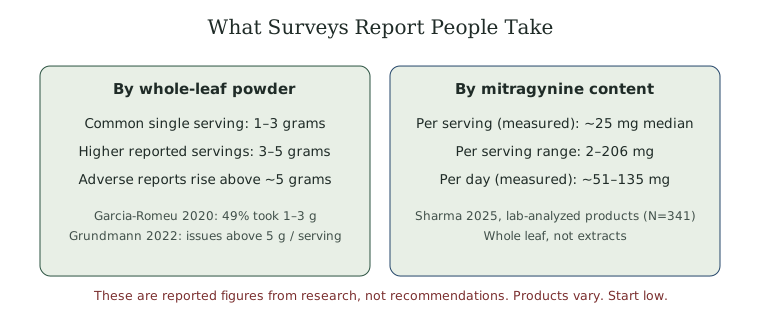
Start with the largest survey. In a 2020 study of 2,798 US kratom users published in Drug and Alcohol Dependence, Albert Garcia-Romeu and colleagues found that 49% took servings of 1 to 3 grams, and daily use was the most common pattern (Garcia-Romeu et al., 2020). That 1-to-3-gram band is the most-reported single serving in the literature. It is a description of behavior, not a target.
Lab analysis adds precision. In a 2025 paper in Drug Testing and Analysis, Abhisheak Sharma and colleagues chemically analyzed 341 whole-leaf products that real consumers used. They calculated a median mitragynine intake of 25.4 milligrams per serving, with a wide range of 2 to 206 milligrams (Sharma et al., 2025). That range is the whole story. The same grams of powder can carry very different amounts of active alkaloid. This is why a serving that felt fine from one bag can feel different from another.
Serving by Format
Servings translate differently across formats. Use the table below as a starting reference, then verify against a product's certificate of analysis (COA).
| Format | How a serving is measured | Reported starting range | Notes |
|---|---|---|---|
| Powder | Grams, on a scale | 1–2 g to start | Most-studied format. Grind density varies. |
| Capsules | Grams per capsule × count | Read the label | Size 00 capsules hold roughly 0.5–0.7 g each. |
| Shots / extracts | Milligrams of mitragynine | Read the mg on the label | Far more concentrated than leaf. Small volumes carry large amounts. |
| Tea | Grams of leaf brewed | Same as powder | Heat does not destroy most alkaloids. Learn more in making kratom tea. |
Measuring is the skill that makes any serving reliable. A level teaspoon of powder is not a fixed weight, because grind density changes bag to bag. A $12 gram scale removes the guesswork. See the full method in measuring kratom accurately. For the broader set of practical walkthroughs, start from kratom how-to guides, and ground the basics in kratom basics.
The First-Time Approach
Approach a first serving as information gathering. First, weigh 1 to 2 grams of plain leaf powder. Secondly, wait. Human data shows why waiting matters. In a 2024 pharmacokinetic study in Molecules, Marilyn Huestis and colleagues measured mitragynine reaching its peak blood level around 1 to 1.7 hours after a serving (Huestis et al., 2024). Thirdly, record what you took and how you felt. Finally, adjust slowly on a later day, never within the same session. Adding more before the first serving has peaked is how people overshoot.
Glenda's note from the field: years ago, working alongside leaf harvesters in the Malaysian countryside, I watched experienced users brew a single measured batch in the morning and simply stop there. No stacking, no chasing. The discipline was the point. That habit — one measured serving, then patience — travels well, and it protects new consumers more than any strain name ever will.
Strain Color and Serving Size
People adjust servings by vein color, and surveys reflect that habit. But the evidence for a fixed color-to-effect rule is thin. In a 2019 study in Substance Use and Misuse, Darshan Singh and colleagues tested whether higher servings produced reliably different effects and found no statistically significant serving-to-effect relationship in their sample (Singh et al., 2019). The practical takeaway is simple. Do not assume a red or a white changes the math. Weigh every product the same way, and let your own careful notes guide you. Compare the colors honestly on the kratom strain chart.
Daily Amount and Frequency
How often you take kratom matters more than how much, according to the dependence research. In a 2024 study in Drug and Alcohol Dependence, Jeffrey Rogers and colleagues found that withdrawal and use-disorder symptoms tracked more closely with how frequently people took kratom than with the size of each serving (Rogers et al., 2024). Adverse gastrointestinal reports also cluster at high and frequent use. In the 2022 survey by Oliver Grundmann and colleagues in The American Journal of Drug and Alcohol Abuse, unwanted effects appeared most among people taking more than 5 grams per serving and more than 22 servings per week (Grundmann et al., 2022). Spacing servings out is the honest answer, and it is covered fully in how often to take kratom.
When to Take Less, or None
Some situations call for caution the research makes clear. First, interactions. Mitragynine slows a liver enzyme called CYP3A4, which processes roughly half of all prescription drugs. In a 2023 clinical study in Clinical Pharmacology and Therapeutics, Rakshit Tanna and colleagues showed a single 2-gram serving of kratom raised blood levels of a test drug, midazolam, by about 40% (Tanna et al., 2023). Talk to a pharmacist before combining kratom with any prescription. Secondly, concentrates. Extracts and shots carry far more mitragynine per serving than leaf, so a "normal" volume is not a normal amount. Compare every option in kratom format comparison, and read the concentrate detail in kratom extracts explained. Thirdly, pregnancy, existing liver conditions, and polydrug use are all reasons to take none. The chemistry behind these cautions is detailed in mitragynine and kratom alkaloids.
Food, Timing, and Consistency
When you take a serving changes how it feels, even when the amount stays the same. An empty stomach speeds onset and can sharpen the effect. It can also increase nausea for some people. A recent meal slows onset and smooths the curve. Neither is right or wrong. The point is consistency. Pick one pattern and keep it steady, so your notes actually mean something from one day to the next. The full comparison lives in kratom on an empty stomach.
Consistency is also what makes tracking useful. Weigh the same way. Take it at the same point relative to meals. Space servings the same distance apart. Change one thing at a time. This is ordinary experimental discipline, and it beats every strain-name promise on the market. A consumer who keeps steady notes learns their own response faster than any chart can teach it.
Reading the Numbers on a Label
Labels use two different scales, and confusing them is a common error. Leaf powder is measured in grams. Extracts and shots are measured in milligrams of mitragynine. A gram of leaf might contain roughly 10 to 20 milligrams of mitragynine, depending on the product. A single extract shot can contain 150 milligrams or more in a tiny volume. That is why the same word — serving — means wildly different amounts across formats. Always check which scale a product uses before comparing it to anything else. When a label prints a milligram figure, trust that number over the volume in the bottle, and confirm it against the product certificate of analysis.
Why There Is No Official Number
People want a single recommended serving, and the honest answer is that none exists yet. Kratom has not been through the controlled human trials that set official amounts for approved products. The pharmacokinetic work is early. In a 2022 clinical study in Pharmaceutics, Rakshit Tanna and colleagues published one of the first careful measurements of how kratom alkaloids move through the body, and they described their own work as filling a knowledge gap that still remains wide (Tanna et al., 2022). That gap is the real reason this page reports ranges instead of prescribing a number. A responsible resource cannot invent precision the science has not produced.
This is also why product testing matters so much. Without a standard serving, the only fixed reference point you have is what a lab actually measured in the bag in front of you. A certificate of analysis turns a vague strain name into a real milligram figure. Learn to read one in how to read a kratom COA, and use that number as the closest thing to a serving standard the market offers.
The Tolerance Reality
Servings tend to climb over time, and that is worth naming plainly. In the 2022 dose-effect survey in Frontiers in Pharmacology, Kirsten Smith and colleagues found that over a quarter of regular users had increased their serving since they started (Smith et al., 2022). Rising tolerance means rising cost and rising dependence risk. The unprofitable truth most vendors skip is this: the smallest effective serving is the one that keeps working. Chasing a bigger effect with a bigger serving is how tolerance accelerates. There is a practical counter-move that costs nothing. Hold your serving steady for weeks rather than nudging it upward at the first plateau. Many consumers find that a stable, modest serving keeps its footing far longer than a rising one. The math is plain. A serving that grows every month becomes both more expensive and harder to step back down from later.
Frequently Asked Questions
How much kratom powder is a typical serving?
Published surveys report 1 to 3 grams as the most common single serving of whole-leaf powder. In a 2020 study of 2,798 users, 49% took 1 to 3 grams. This is reported behavior, not a recommendation. Start at the low end and weigh it.
How long before a kratom serving takes effect?
A 2024 pharmacokinetic study measured mitragynine reaching peak blood levels about 1 to 1.7 hours after a serving. Waiting the full window before considering more stops people from overshooting.
Does strain color change how much to take?
The evidence is weak. A 2019 study found no statistically significant serving-to-effect relationship. Weigh every product the same way rather than assuming a color changes the amount.
Is it the amount or the frequency that raises dependence risk?
Research points to frequency. A 2024 study found withdrawal and use-disorder symptoms tracked more closely with how often people took kratom than with serving size. Spacing servings out is the safer pattern.