
Kratom on an Empty Stomach: Timing — Food — and What Users Report
Taking kratom on an empty stomach versus after a meal is a real trade-off that shapes your experience, and understanding it helps you avoid both a wasted serving and an upset stomach. An empty stomach gives a faster, more noticeable onset but raises the chance of nausea. A full stomach is gentler on the gut but delays and softens the effect. Neither is simply right, and the best choice depends on your goals and your stomach. This guide covers the comparison, the timing windows, and how to manage nausea honestly.
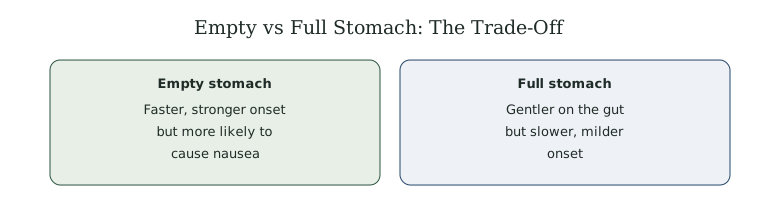
Empty vs Full Stomach
The core difference comes down to absorption and comfort. On an empty stomach, kratom is absorbed more quickly and the onset feels faster and often stronger, since nothing slows it down. The cost is a higher chance of nausea, which is one of kratom's most common side effects and is worse when there is no food to buffer the stomach. On a full stomach, food slows absorption, so the onset is more gradual and the peak milder, but the stomach handles it more comfortably. Ground your serving in the kratom dosage guide, since the amount interacts with this trade-off, larger servings being harder on an empty stomach.
The Nausea Reality
Nausea is the honest downside of empty-stomach use, and it deserves a plain look. Many people find that taking kratom with a completely empty stomach, especially at larger servings, brings on queasiness or an upset stomach. This is common and not a sign of a bad product. The faster, stronger onset that draws people to empty-stomach use is the same mechanism that makes nausea more likely. So the trade-off is direct: you accept more nausea risk in exchange for a quicker, more pronounced effect. For people prone to a sensitive stomach, this trade often is not worth it, and a little food is the simple solution.
Timing Windows After Meals
The practical middle ground is timing kratom relative to meals. Many users find that taking kratom on a light stomach, roughly an hour or two after a modest meal rather than either completely empty or right after a large one, balances a reasonable onset with tolerable comfort. A large, heavy meal will slow and soften the effect the most, while a completely empty stomach maximizes both onset and nausea risk. Experiment with the window that suits you, since individual stomachs vary. The timing lever lets you tune the trade-off rather than choosing only between the two extremes.
Managing Nausea Honestly
If nausea is a problem, several honest adjustments help. Eating a small amount of food before or with your kratom is the most reliable fix, trading a little onset speed for real comfort. Ginger, as tea or otherwise, settles the stomach for some people. Staying well hydrated helps, which connects to the broader kratom and hydration considerations. Taking a smaller serving reduces nausea directly, since larger amounts are harder on the stomach. And brewing kratom as tea rather than swallowing powder is gentler for some. If nausea persists despite these adjustments, that is worth heeding as a sign to eat first or reduce your serving rather than pushing through.
Who Should Always Eat First
Some people should simply always take kratom with food. Anyone with a sensitive stomach, a history of acid reflux or nausea, or who is new to kratom and still learning their tolerance is better served by eating first, accepting the slower onset in exchange for comfort. Frequency also matters here, since taking kratom on an empty stomach many times a day compounds the nausea risk, covered in how often to take kratom. Ground the fundamentals in kratom 101. There is no benefit worth persistent nausea, so if empty-stomach use consistently makes you queasy, eating first is the clear answer.
Kratom, Food, and Consistency
One practical point ties food timing to consistent results. Because whether your stomach is empty or full changes both onset and intensity, keeping your food timing consistent helps make your kratom experiences more predictable. If you take a serving on an empty stomach one day and right after a large meal the next, the two experiences will differ even at the same weighed amount, which can make it seem like the product is inconsistent when really the variable is your stomach. For anyone trying to learn their response or dial in a serving, holding the food timing steady removes one source of variation, so the effect of the serving size itself becomes clearer. This is the same logic that makes weighing every serving worthwhile: the fewer variables you let drift, the more reliably you can learn what actually works for you.
Finding Your Own Balance
The empty-versus-full question ultimately comes down to personal experimentation, since stomachs vary widely. Start by noticing how your stomach responds to your usual serving on an empty stomach, and whether the faster onset is worth any queasiness you feel. If nausea is minimal, empty-stomach use may suit you well for its quicker, stronger effect. If queasiness is a regular problem, shift toward taking kratom on a light stomach or with a small snack, and see whether the trade of a little onset speed for real comfort is worthwhile. Keep notes on both the timing and your response, the same way you would track serving size, since the interaction between food, serving, and your individual stomach is exactly the kind of personal pattern that notes reveal. Within a week or two of paying attention, you will know your own best approach, and it may differ from what works for someone else. There is no universal right answer here, only the balance of onset and comfort that fits your particular stomach, and finding it is a matter of honest observation rather than following a rule. The reward for that small effort is an approach that consistently gives you the onset you want without the discomfort you do not.
Taking kratom on an empty stomach delivers a faster, stronger onset at the cost of a higher chance of nausea, while a full stomach is gentler but slower and milder. The best middle ground for many is a light stomach, an hour or two after a modest meal, which balances onset and comfort. Nausea is the honest downside of empty-stomach use, manageable with food, ginger, hydration, smaller servings, or tea. Anyone with a sensitive stomach or new to kratom should simply eat first. The trade-off is real and personal, so tune the timing to your own stomach rather than forcing a method that leaves you queasy.
Frequently Asked Questions
Should I take kratom on an empty stomach?
It gives a faster, stronger onset but raises the chance of nausea. If you have a sensitive stomach or are new to kratom, eating first is gentler. A light stomach an hour or two after a modest meal is a good middle ground.
Why does kratom make me nauseous?
Nausea is common, especially on an empty stomach and at larger servings, since the faster absorption that empty-stomach use provides is the same mechanism that increases queasiness. Food, smaller servings, and tea help.
How long after eating should I take kratom?
Many users find a light stomach, roughly an hour or two after a modest meal, balances a reasonable onset with comfort. A large heavy meal slows the effect most, while a completely empty stomach maximizes nausea risk.