
Kratom Powder: The Honest Guide to the Original Format
Kratom powder is the original and most versatile form of kratom, made by drying the leaf and grinding it fine. It is the least processed product on the market, the cheapest per gram, and the most flexible, since you can weigh any serving, brew it as tea, or put it into capsules yourself. For most consumers, powder is the sensible default. Understanding how it is made, what grind quality signals, and how to evaluate a bag are the fundamentals that make powder the reliable choice it is.
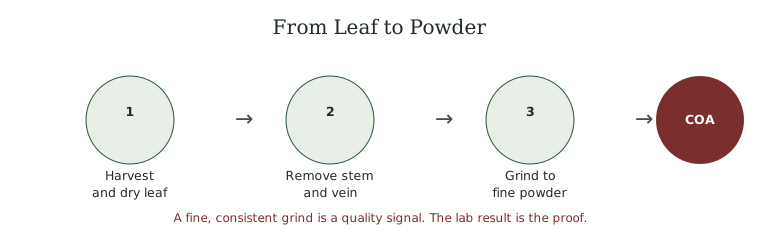
How Powder Is Made
Kratom powder starts as leaf harvested from the tree, dried according to the intended vein color, then stripped of stem and vein and ground into a fine powder. The care taken at each step shows up in the final product. Well-made powder is finely and evenly ground, a smooth consistency rather than a coarse or gritty one. Ground the plant behind the powder in the kratom plant. The process is simple, which is part of powder's appeal: it is close to the raw leaf, with little between you and the plant.
Grind Quality and What It Signals
Grind quality is a visible clue to how carefully a product was made. A fine, uniform grind suggests attention and good equipment, and it also mixes and brews more easily. A coarse, uneven, or stemmy grind can signal a rushed or low-quality process, and stem content dilutes the leaf. This does not mean the finest grind is always the best product, since the lab result still decides potency and purity, but grind is a reasonable first-glance signal. Judge it alongside color and smell, then confirm everything with the certificate of analysis.
Micron and Nano Grind Claims
Some vendors market ultra-fine "micron" or "nano" powder, and these claims deserve a skeptical eye. A finer grind can mix more smoothly and may feel slightly faster, but the dramatic absorption benefits some sellers imply are not well established. The full analysis of particle-size claims is in the nano kratom explained. Regard micron and nano grind as a modest convenience feature at most, not a potency upgrade worth a large premium. The mitragynine percentage, not the particle size, is what determines how strong a powder is.
Flavored Powder Truth
Flavored kratom powders exist to mask the bitter taste, and the honest note is to read the ingredient panel. Added flavorings and sweeteners change what you are buying, and they can hide the amount of actual leaf per gram. A flavored powder is not inherently bad, but it is less transparent than plain leaf, and you are paying for additives alongside kratom. If taste is the obstacle, brewing plain powder as tea or using capsules often solves it without the added ingredients. Plain, unflavored powder remains the most transparent way to buy kratom.
How to Evaluate a Powder
Judge a kratom powder on four things. First, color: it should look like a vibrant, consistent green appropriate to its vein, not dull, brown, or faded, which can indicate age or poor storage. Secondly, smell: fresh kratom has an earthy, plant-like aroma, while a musty or off smell is a warning. Thirdly, grind: fine and uniform is better than coarse or stemmy. Fourthly, and most importantly, the certificate of analysis, which is the only way to confirm potency and purity. The full method for reading that document is in how to read a kratom COA. The first three are quick clues. The lab result is the verdict.
Working With Powder
Powder's flexibility is its greatest strength, and using it well is straightforward. Weigh a consistent serving on a scale, following the measuring kratom accurately method, then take it by the toss-and-wash technique, in a drink, or brewed as tea. The full technique guide is in how to take kratom powder. Store it properly to protect the alkaloids, as covered in storing kratom properly. If you prefer to skip the taste and weighing, the same powder can go into kratom capsules guide, though that adds cost.
How Powder Compares to Other Forms
Against other formats, powder wins on flexibility and value while asking a little more effort. It is cheaper per gram than capsules, more controllable than edibles, and more transparent than extracts, but it requires weighing and it tastes bitter. The full landscape is mapped in the kratom format comparison. For anyone willing to weigh a serving, powder is the format that keeps you closest to the leaf, gives you the most control, and costs the least, which is exactly why it remains the standard against which every other form is measured.
Why Powder Remains the Standard
For all the formats that have arrived since, powder endures as the reference point, and the reasons are practical. It is the cheapest way to buy a given amount of mitragynine, since you pay for leaf and nothing else. It is the most flexible, adapting to tea, toss-and-wash, capsules, or cooking. It is the most transparent, with no shell, sweetener, or concentrate between you and the leaf. And it is the easiest to test meaningfully, since the certificate of analysis describes exactly what is in the bag. Every other format trades away one of these strengths for a specific convenience. Capsules trade cost and control for portability. Extracts trade transparency and margin for potency. Edibles trade precision for taste. Powder gives all of it up for nothing except the minor effort of weighing, which is why experienced consumers so often circle back to it.
The Bottom Line on Kratom Powder
Kratom powder is the original, most versatile, and most economical form of kratom, close to the raw leaf and flexible enough for any serving or preparation. Grind quality, color, and smell are useful first-glance clues, while micron and nano claims are modest at best and flavored powders trade transparency for taste. Judge any powder by its certificate of analysis above all, store it well, and weigh a consistent serving. For the majority of consumers, plain tested powder is the smartest way to buy kratom, and it is the benchmark every other format is trying to improve upon.
Frequently Asked Questions
How is kratom powder made?
Leaf is harvested, dried according to the intended vein color, stripped of stem and vein, then ground fine. A smooth, even grind reflects careful processing.
Is finer kratom powder better?
A fine, uniform grind mixes and brews more easily and can signal careful processing, but micron and nano claims are modest at best. The mitragynine percentage, not particle size, determines strength.
How can I tell if kratom powder is good quality?
Check color (vibrant, consistent green), smell (earthy, not musty), and grind (fine, not stemmy), then confirm potency and purity with the certificate of analysis, which is the deciding factor.