
Measuring Kratom: Grams — Teaspoons — and Why a Scale Wins
Measuring kratom accurately is the single most protective habit a consumer can build, and it comes down to one rule: use a scale, not a spoon. Volume measures like teaspoons vary wildly depending on grind and how the powder settles, which means the same "teaspoon" can hold very different amounts. A cheap kitchen scale removes that guesswork entirely. This guide explains why volume measurement fails, how the conversions really work, and why a small investment in a scale is the best thing you can do for consistent, controlled kratom use.
Why Volume Measurement Fails
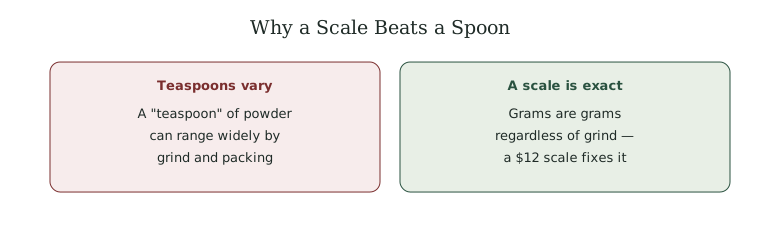
The core problem with measuring kratom by teaspoon or tablespoon is that powder density varies. A finely ground powder packs differently than a coarse one, and how firmly the powder settles changes how much fits in a spoon. This means a "level teaspoon" is not a reliable amount, it is an estimate that can be off substantially from one batch or scoop to the next. Since your serving accuracy directly affects your experience, this variability is a real problem. Ground your serving targets in the kratom dosage guide, all of which are given in grams precisely because grams are the only reliable unit.
The Conversion Reality
People still want teaspoon-to-gram conversions, so here is the honest version with its necessary caveat. As a rough guide, a level teaspoon of kratom powder is often around 2 to 2.5 grams, and a tablespoon around 6 to 7 grams, but these are approximations that vary by grind and packing. Regard any such conversion as a loose starting reference, never as a precise measure. The variability is exactly why these numbers come with a warning label. If you rely on volume conversions, you are accepting a margin of error that a scale would eliminate. The powder-handling context is covered in the kratom powder guide.
The Scale Solution
A small digital scale solves the entire problem for very little money. A basic kitchen or jewelry scale accurate to 0.1 grams costs around ten to fifteen dollars and turns serving measurement from a guess into a fact. Weigh your powder directly, and the grind and packing no longer matter, since grams are grams regardless of density. This one inexpensive tool is the difference between consistent, controlled servings and rough estimates that drift over time. For anyone using kratom regularly, a scale is not an optional accessory, it is the foundational tool that makes every other serving decision reliable.
How to Weigh Accurately
Weighing kratom well takes a few simple habits. Place your container or a small dish on the scale and use the tare function to zero out its weight, so you measure only the powder. Add powder gradually until you reach your target in grams. For the most consistency, weigh into the same container each time and keep the scale on a flat, stable surface. Then take the powder by your preferred method, covered in how to take kratom powder. These habits take seconds and remove nearly all the variability that trips up people who measure by eye or by spoon.
Why Accuracy Matters
Accurate measurement is not fussiness, it is the basis of a controlled relationship with kratom. When you know precisely how much you take, you can adjust in small, deliberate steps, keep notes that actually mean something, and avoid the accidental over-serving that comes from an unexpectedly heavy scoop. Ground the fundamentals in kratom 101. Consistency is what lets you learn your own response and manage tolerance sensibly, and consistency is impossible without accurate measurement. The scale is what makes everything else in responsible kratom use possible.
Common Measuring Mistakes
A few measuring mistakes recur often enough to name. The first is trusting a teaspoon from a strain-name recommendation without weighing, which imports someone else's density guess into your serving. The second is measuring a heaping rather than a level scoop, which adds a substantial hidden amount. The third is not taring the container, so the measurement includes the dish's weight and comes out short. The fourth is using a scale too imprecise for the job, since a scale that only reads whole grams cannot tell a two-gram serving from a nearly three-gram one. And the fifth is measuring inconsistently, a spoon one day and a scale the next, which makes your notes meaningless. Each of these is eliminated by the same simple practice: a 0.1-gram scale, a tared container, and the same method every time you measure.
Building the Measuring Habit
Accurate measuring becomes effortless once it is a habit rather than a decision. Keep your scale where you keep your kratom, so weighing is the default rather than an extra step you might skip. Weigh into the same container each time, so the process runs on autopilot. Record what you weigh alongside how you responded, so your servings build into useful personal data over time. Within a week or two, weighing takes no more thought than measuring coffee, and it quietly underpins everything else you do with kratom. The people who struggle with inconsistent experiences are almost always the ones estimating by eye, while the people with stable, controlled use are almost always the ones who weigh. The habit is small, the payoff is large, and it costs a single inexpensive tool to build. Once the habit is in place, you will wonder how you ever measured any other way.
The Bottom Line on Measuring Kratom
Measuring kratom accurately means using a scale, not a spoon, because volume measures vary too much to trust. Teaspoon conversions are rough approximations that drift with grind and packing, while a ten-dollar digital scale gives you exact grams every time. Weigh into a tared container, work in the grams your serving targets are given in, and you turn kratom serving from guesswork into a controlled, repeatable practice. This one small habit underpins everything else in responsible use, from adjusting slowly to managing tolerance. If you take kratom regularly, a scale is the best fifteen dollars you will spend on it.
Frequently Asked Questions
How many grams is a teaspoon of kratom?
Roughly 2 to 2.5 grams, but this varies by grind and packing, so use it only as a loose reference. A scale is the only reliable way to measure, since volume measures drift substantially.
Why should I weigh kratom instead of using a spoon?
Powder density varies with grind and how it settles, so a teaspoon can hold noticeably different amounts each time. A scale measures exact grams regardless of density, removing the guesswork.
What kind of scale do I need for kratom?
A basic digital kitchen or jewelry scale accurate to 0.1 grams, costing around ten to fifteen dollars, is all you need. It turns serving measurement from a guess into a fact.