
What Is Kratom? The Plant — the Leaves — and What Actually Matters
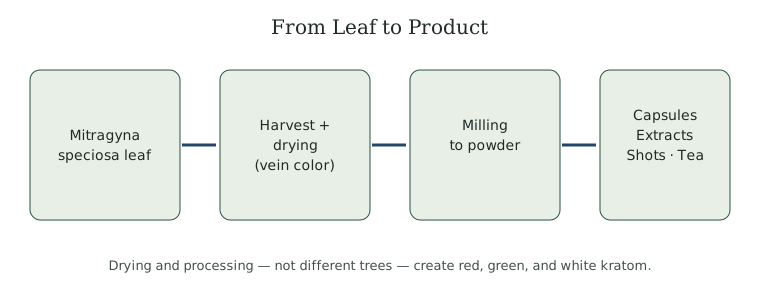
Kratom is the consumer name for Mitragyna speciosa, a tropical evergreen tree in the coffee family (Rubiaceae) native to Southeast Asia. Kratom products — powders, capsules, extracts, and teas — all begin as the leaves of this one tree. The single most useful fact for a new consumer is this: the colorful strain names on packages describe drying and processing choices, not different plants. One common misconception deserves correction immediately. Red, green, and white kratom do not come from three different trees; they come from the same species handled three different ways after harvest.
The Leaf and Its Vein Colors
A kratom leaf is a broad, glossy leaf with a visible central vein. That central vein gives the market its color language. There are 3 primary vein designations, plus 2 process-created colors:
- Red vein — leaves given longer, warmer drying, associated in user reports with slower-paced character.
- Green vein — the middle drying path, and the most common starting point for new consumers.
- White vein — earlier-harvest leaf with shorter drying, associated in surveys with brighter character.
- Gold and yellow — extended-drying or fermentation variations of the colors above, not separate leaf veins.
Explore every color and region combination in kratom strain types, or compare them side by side on the kratom strain chart.
How Leaf Becomes Product
Processing follows one sequence everywhere. First, farmers harvest mature leaves by hand. Secondly, processors dry the leaves — indoors, outdoors, or fermented — which sets the color designation. Thirdly, mills grind dried leaf into powder, the base material for everything else. Finally, manufacturers turn powder into consumer formats: capsules, extracts, shots, gummies, and tea cuts. Compare every format honestly in kratom product formats.
The Chemistry in One Paragraph
Kratom leaf contains more than 40 identified alkaloids. Two alkaloids dominate the conversation: mitragynine, the most abundant compound and the standard potency metric on lab certificates, and 7-hydroxymitragynine, present in far smaller amounts. Alkaloid concentration varies by harvest, drying, and region — which is exactly why lab testing matters more than strain names. Read the plain-language chemistry in mitragynine and kratom alkaloids.
Where Kratom Grows
Kratom grows commercially in the tropical belt of Southeast Asia. Indonesia — and the island of Borneo in particular — supplies the large majority of kratom on the US market, regardless of what regional name appears on the label. Thailand, Malaysia, and Vietnam contribute history and naming conventions more than volume. See the supply chain from soil to export in how kratom is grown.
The Truth About Strain Names
Strain names are marketing built on two real inputs. The first input is vein color, which reflects drying. The second input is region, which reflects — at best — the harvest origin, and at worst a name a vendor liked. "Maeng Da," for example, is Thai slang used as a premium grading claim, not a botanical variety. A consumer site owes you that honesty: judge products by their certificate of analysis (COA), not by the romance of the name.
Is Kratom Legal?
Kratom is not federally scheduled in the United States, and the picture below the federal level is a patchwork. Six states ban it, a growing list protects it with consumer-protection statutes, and several regulate age or labeling. Check your state on the monthly-updated map at where kratom is legal.
What Kratom Is Not
Clearing up what kratom is requires clearing up what it is not. Kratom is not an approved medicine; the FDA has approved no kratom product for any use. Kratom is not a single standardized substance; alkaloid content varies from lot to lot, which is why certificates of analysis exist. Kratom is not a synthetic; it is dried plant leaf, though concentrated extracts and isolated compounds are a separate, stronger product category. Kratom is also not "7-OH" — some products sold beside kratom are concentrated 7-hydroxymitragynine, a different risk profile flagged in the alkaloids explainer.
Who Uses Kratom, by the Numbers
Consumer research gives a rough profile. Published survey work, including large samples collected by academic groups, describes a predominantly adult user base that buys online and in specialty shops. Surveys consistently report that consumers reach for different vein colors at different times of day, which is the origin of the color-character associations repeated across vendor sites. Two facts anchor the honest reading of this data. First, survey data is self-reported, not clinical measurement. Secondly, self-reported patterns still tell you how the market talks about strains — useful vocabulary, weak proof. This site cites those surveys by name wherever it reports what users say.
How to Judge a Kratom Product
Judging a kratom product is a learnable skill, and it rests on one document. That document is the certificate of analysis (COA), a lab report that states a product's mitragynine percentage and screens for heavy metals and microbial contamination. A trustworthy product publishes its COA and matches it to a lot number on the package. Three checks separate tested kratom from a gamble. First, confirm a COA exists and names the specific lot. Secondly, read the mitragynine percentage rather than the marketing name. Thirdly, confirm the contaminant screens passed. The full walkthrough lives in how to read a kratom COA.
The Vocabulary You Will See
Kratom packaging uses a small, repeated vocabulary, and decoding it stops overpaying. "Maeng Da" is a grading claim, not a plant variety. "Bali" and "Borneo" are region styles more than confirmed origins. "Gold" and "yellow" describe drying. "Extract," "UEI," and "full spectrum" describe concentration, and concentrated products carry different economics and tolerance considerations than plain leaf. Terms like "premium," "royal," and "ultra" describe nothing measurable at all. Learn the concentrate side of that vocabulary in kratom extracts explained, and dismiss every unmeasurable superlative as marketing.
A Short History of the Plant
Kratom has a long documented history in Southeast Asia, where laborers chewed fresh leaves and brewed them as tea for generations. That traditional use explains both the plant's regional names and the modern strain vocabulary built on top of them. Western consumer demand is far newer, and it arrived faster than research or regulation could follow. That gap — old plant, new market, thin oversight — is the exact space this site was built to fill, with evidence on one side and marketing on the other.
Where to Go Next
Two pages answer most next questions. Learn evidence-based amounts in the kratom dosage guide, and find every how-to in one place under practical kratom guides.
Frequently Asked Questions
Is kratom the same as Mitragyna speciosa?
Yes. Kratom is the common name for Mitragyna speciosa, a tropical tree in the coffee family native to Southeast Asia.
Do red, green, and white kratom come from different plants?
No. All three come from the same species. Drying and processing after harvest create the color designations.
What is the main active compound in kratom?
Mitragynine is the most abundant alkaloid and the standard potency measure on lab certificates, alongside smaller amounts of 7-hydroxymitragynine.
Is kratom legal in the United States?
Kratom is not federally scheduled, but six states ban it and others regulate it. Check the state-by-state map before buying.