Where Is Kratom Illegal? State-by-State Map (Updated Monthly)
Kratom's legal status in the United States is a patchwork that varies by state and even by county, which makes knowing your local law essential before buying. Kratom is legal in most states but banned in a handful, protected by consumer-safety laws in others, and restricted at the local level in some places that otherwise allow it. This guide maps the four legal categories, explains the states where kratom is banned or restricted, and points to the individual state pages. Because laws change, everything here should be confirmed against current official sources before you rely on it.
Why This Is a Patchwork
Kratom is legal at the federal level in the United States, meaning there is no national ban, but the federal government has not established a regulatory framework for it either. This federal silence leaves the question of kratom's legality and regulation to individual states and, in some cases, to counties and cities. The result is a genuine patchwork, where kratom can be freely legal in one state, banned in a neighboring one, and legal-but-locally-restricted in a third. This is why there is no single answer to whether kratom is legal, and why checking your specific location matters. The broader legal picture is collected in the kratom law resource.
The Four Legal Categories
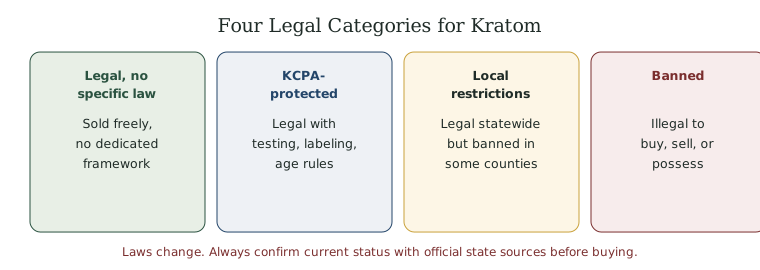
Kratom's status in any given place falls into one of four categories. First, legal with no specific law, where kratom is sold freely under general commerce rules with no dedicated framework, which describes much of the country. Secondly, KCPA-protected, where a state has passed the Kratom Consumer Protection Act to require testing, labeling, and age limits, covered in the Kratom Consumer Protection Act. Thirdly, local restrictions, where kratom is legal statewide but banned in certain counties or cities. Fourthly, banned, where kratom is illegal to buy, sell, or possess. Knowing which category applies to you is the practical goal of checking the map.
The States Where Kratom Is Banned
A small number of states have banned kratom outright, and these have historically included a handful of states where kratom is illegal to possess or sell. Among the states that have enacted bans are Vermont, covered in kratom in Vermont, along with a few others that passed prohibitions in earlier years. In these states, the ban typically works by listing kratom's alkaloids as controlled substances rather than naming the plant directly. Because the list of banned states has shifted over time as some reconsider their laws, anyone in or traveling to a potential ban state should verify the current status directly rather than relying on any list, since this is exactly the kind of fact that changes.
States With Local Restrictions
Some states allow kratom statewide but leave room for local bans, creating a within-state patchwork. This means kratom can be legal in most of a state while being prohibited in specific counties or cities. Places like Massachusetts have seen local ordinance activity, covered in kratom in Massachusetts, where municipal-level rules matter alongside state law. This local layer is easy to overlook, since people naturally think in terms of state legality, but a county or city ban is just as binding where it applies. If you live in or travel through a state with local restrictions, checking the specific county or city rules is as important as knowing the state law.
KCPA States
A growing number of states have taken the opposite approach to a ban, passing the Kratom Consumer Protection Act to regulate kratom for safety rather than prohibit it. These laws typically require lab testing, accurate labeling, and minimum age limits, raising the baseline for products sold there. States like Tennessee have kratom laws that include age and product requirements, covered in kratom in Tennessee. The KCPA approach reflects a regulatory philosophy of keeping kratom legal while protecting consumers, and the list of states adopting it has grown over time. For buyers, a KCPA state means a higher floor on product quality and clearer rules, which is covered fully in the dedicated KCPA page.
Individual State Pages
Because the details vary so much, this resource includes pages for individual states with their own notable situations. Beyond those already mentioned, these include states like Idaho, covered in kratom in Idaho, Hawaii, covered in kratom in Hawaii, and Iowa, covered in kratom in Iowa, each with its own legislative history and current status. These state pages give the specific picture for their location, including legislative activity and any local notes. Checking your own state's page, alongside confirming with official sources, is the most reliable way to understand your local situation, since state-specific detail is where the patchwork actually lives.
Traveling With Kratom
The patchwork matters most when you travel, since crossing a state line can change kratom's legal status. Carrying kratom into a state or locality where it is banned means possessing an illegal substance there, regardless of where you bought it legally. Air travel adds its own considerations, covered in flying with kratom. Before traveling with kratom, check the legal status of your destination and anywhere you pass through, since ignorance of a local ban is no protection. For ongoing changes and legislative developments, the kratom legislation news section tracks the evolving picture, and the fundamentals are in kratom 101.
Staying Current
The single most important thing to understand about kratom law is that it changes. States introduce bans, repeal them, pass consumer-protection acts, and adjust their rules regularly, and local governments do the same. This means any snapshot of kratom's legal status, including this one, can become outdated. Always confirm the current law in your specific location through official state and local government sources or the American Kratom Association before buying or traveling with kratom. Regard this map as an orientation to the categories and the general landscape, not as a substitute for checking the live legal status where you actually are. The responsibility to know your current local law rests with you.
How Bans Actually Work
Understanding the mechanism behind kratom bans helps make sense of the legal picture. States that ban kratom rarely do so by naming the plant "kratom" directly in the law. Instead, they typically add kratom's primary alkaloids, mitragynine and 7-hydroxymitragynine, to their list of controlled substances. Once those compounds are scheduled, any product containing them becomes illegal by extension, which effectively bans kratom without the word necessarily appearing in the statute. This technical detail matters for a few reasons. It explains why some bans can seem obscure or hard to find, since they live in a controlled-substances schedule rather than a kratom-specific law. It also means that repealing a ban involves removing those alkaloids from the schedule, which is the mechanism repeal efforts pursue. Knowing that bans work through alkaloid scheduling rather than plant naming clarifies both how a state arrived at a ban and how it might reverse one.
The Direction of Change
While kratom law shifts in both directions, the broader trend over recent years has leaned toward regulation rather than prohibition. More states have adopted consumer-protection legislation than have enacted new bans, reflecting a growing preference for regulating kratom's safety over prohibiting it outright. This trend is not assured to continue, and individual states can and do move toward restriction, but the general momentum has favored the KCPA model. This direction matters for anyone tracking the landscape, since it suggests that the patchwork is slowly becoming more oriented toward regulated legality than toward bans. Still, because any individual state can buck the trend, the direction of change nationally is no substitute for checking the specific current status where you live, which remains the only reliable way to know your own situation.
County and City Exceptions
The local layer of kratom law deserves closer attention, since it is the part people most often miss. Even in states where kratom is legal, individual counties and cities can and sometimes do enact their own bans, creating pockets of prohibition within an otherwise-legal state. A well-known example of this pattern is that certain municipalities have banned kratom while their surrounding state permits it, meaning residents of those specific places face restrictions their neighbors a county away do not. This local variation is legally binding where it applies, and it is easy to overlook because people naturally research state law and stop there. Anyone who wants to be certain of their situation should check not only their state law but also any county or city ordinances that might apply, since a local ban carries the same force within its borders as a state ban does statewide. The practical lesson is that state-level legality is necessary but not always sufficient, and the truly careful approach confirms the rules at every level of government that governs where you live or travel.
International Considerations
Beyond the United States, kratom's legal status varies widely by country, which matters for anyone traveling internationally. Some countries permit kratom, others ban it entirely, and the rules bear no necessary relationship to United States law. A product legal to buy and possess in much of the United States can be strictly prohibited in another country, with serious consequences for bringing it across an international border. Because international drug laws can be severe and vary enormously, anyone traveling abroad with or to obtain kratom should research the destination country's specific laws thoroughly through official sources before doing so. The patchwork nature of kratom law is even more pronounced internationally than domestically, and the stakes of getting it wrong at an international border can be considerably higher than a domestic misunderstanding.
The Bottom Line on Kratom Legality
Kratom's legal status in the United States is a patchwork with no federal ban but no federal framework either, leaving the question to states and localities. Status falls into four categories: legal with no specific law, KCPA-protected, locally restricted, and banned. A handful of states ban kratom outright, usually by listing its alkaloids, while a growing number regulate it through the Kratom Consumer Protection Act, and some states allow it statewide but permit local bans. Because this landscape shifts constantly, the essential habit is to confirm the current law in your specific location through official sources before buying or traveling, since only your live local status truly answers whether kratom is legal for you.
Frequently Asked Questions
Is kratom legal in the United States?
Kratom is legal at the federal level with no national ban, but there is no federal framework, so legality varies by state and sometimes by county. It is legal in most states, banned in a handful, and regulated in others.
Which states ban kratom?
A small number of states have banned kratom, historically including Vermont and a few others, usually by listing its alkaloids as controlled substances. Because the list shifts over time, always confirm the current status directly.
How do I know if kratom is legal where I live?
Check your state's specific status and any local county or city rules, since kratom can be legal statewide but banned locally. Confirm with official state sources or the American Kratom Association, since laws change frequently.