
Kratom Tea: How to Make It — Temperature Truth — and What to Buy
Kratom tea is leaf or powder simmered in water, then strained and served. It is the traditional way kratom has been consumed in Southeast Asia for generations, and it remains one of the gentlest ways to take it. There is a stubborn myth that heat destroys kratom, so people either avoid tea or boil it aggressively out of confusion. The research says otherwise. The main alkaloids tolerate a simmer just fine. What you need is a simple method, a little patience, and an understanding of what heat actually does.
The Heat-Stability Truth
The "boiling ruins kratom" idea is mostly a myth, and there is data to settle it. In a 2020 study in the Journal of Analytical Toxicology, Stephanie Basiliere and colleagues measured how kratom's alkaloids hold up across a range of temperatures and pH levels. They found no significant loss of mitragynine in water at 4, 20, or 40 degrees Celsius over eight hours, and its close relatives were even more stable (Basiliere et al., 2020). The practical lesson is that a normal simmer does not wreck your tea. You do not need a violent, prolonged boil, and a gentle simmer protects the leaf while still extracting it.
A Simple Kratom Tea Method
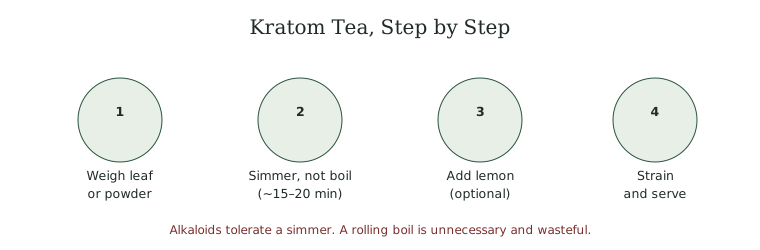
Make kratom tea in four steps. First, weigh your serving of powder or crushed leaf on a scale, following the survey-based ranges in the kratom dosage guide. Secondly, add it to water and bring it to a gentle simmer, not a rolling boil, for roughly 15 to 20 minutes. Thirdly, add an acid like lemon juice if you like. Fourthly, strain out the plant material and serve. The method is forgiving. The main things to get right are an accurate serving and a simmer rather than a blast of heat.
The Lemon and Acid Trick
Many people add lemon juice or another acid to their kratom tea, and there is a reasonable basis for it, with a caveat. The same 2020 stability research found that kratom alkaloids are acid-labile, meaning acidic conditions do change them over time. Believers say a splash of acid helps extract or preserve the alkaloids in the cup. The honest read is that a small amount of lemon for taste and mild extraction is fine, but soaking leaf in strong acid for long periods is not clearly better and could degrade alkaloids. Use lemon for flavor and a modest extraction boost, not as a magic multiplier.
Crushed Leaf vs Powder for Tea
Both crushed leaf and powder make tea, and they strain differently. Crushed leaf, covered in the crushed leaf kratom guide, holds together and strains cleanly, leaving a clearer cup. Powder extracts fast but turns muddy and is harder to strain fully, so some powder ends up in the drink. Neither is wrong. Crushed leaf gives a tidier traditional tea. Powder is more common and cheaper but benefits from careful straining or simply accepting some sediment. The toss-and-wash alternative for powder is covered in how to take kratom powder.
Tea Serving and Potency
Tea does not change your serving math, it just changes the delivery. The grams you brew are the same grams you would weigh for any method, so the ranges in the dosage guide still apply. Because tea is a liquid taken on a relatively empty stomach in many cases, onset can feel a touch quicker than a heavy capsule. What to mix it with for taste is covered in what to mix kratom with. The key discipline is unchanged: weigh the serving, wait the full onset window, and adjust only on a later day.
Buying Tea-Cut Kratom
Some vendors sell kratom specifically cut for tea, usually as crushed or coarse leaf. Buy it the same way you buy any kratom. Read the mitragynine percentage on the certificate of analysis, confirm the lot number, and check the contaminant screens. A "tea cut" label describes the grind, not the quality. Ground the fundamentals in the kratom plant if the vocabulary is new. Tea is a preparation method, and the leaf inside your cup is only as good as the testing behind it.
Common Tea Mistakes to Avoid
A few avoidable mistakes trip up new kratom tea brewers, and naming them saves frustration. The first is eyeballing the amount instead of weighing it, since an accurate serving matters just as much in tea as in any format. The second is fearing heat so much that you barely warm the water, which under-extracts the leaf, or the opposite mistake of a violent prolonged boil, which is unnecessary since the alkaloids tolerate a simmer. The third is skipping the strain step with powder and ending up with a gritty, muddy cup, when crushed leaf or careful straining would have given a cleaner result. The fourth is expecting tea to change the serving math, when in fact the grams you brew are the same grams you would weigh for any method. And the fifth is drinking tea on a completely empty stomach and then blaming the tea for nausea, when a little food often solves it. Avoid these five, and kratom tea becomes the simple, forgiving preparation it is meant to be, closer to the traditional way the leaf has been used for generations than any capsule or extract can offer. Weigh, simmer, strain, and enjoy a cup made the way kratom has been prepared for a very long time.
The Bottom Line on Kratom Tea
Kratom tea is a simple, traditional, and forgiving way to take the leaf. The fear that heat destroys it is mostly myth, since the main alkaloids tolerate a simmer according to stability research. Weigh your serving, simmer gently for 15 to 20 minutes, add lemon for taste if you like, and strain. Use crushed leaf for a cleaner cup or powder for convenience. The serving math is identical to every other method, and the certificate of analysis still decides quality. Made with a scale and a little patience, kratom tea is one of the most approachable formats there is.
Frequently Asked Questions
Does boiling destroy kratom?
Mostly a myth. A 2020 stability study found no significant mitragynine loss in water at 4 to 40 degrees Celsius over eight hours. A gentle simmer is fine, and a hard rolling boil is unnecessary.
Should I add lemon to kratom tea?
A small amount for taste and mild extraction is fine. Kratom alkaloids are acid-labile, so soaking leaf in strong acid for long periods is not clearly better and could degrade them. Use lemon for flavor, not as a multiplier.
Is crushed leaf or powder better for tea?
Crushed leaf strains cleanly for a clearer cup. Powder extracts fast but turns muddy and is harder to strain. Both work, and the serving math is identical.