
Kratom Tablets: How They Differ From Capsules
Kratom tablets are powder compressed into solid pills, an alternative to capsules that trades a few properties for a different kind of convenience. Where a capsule holds loose powder in a shell, a tablet presses the powder together with binding agents into a hard pill. Tablets are less common than capsules but appear in both leaf and extract forms. Understanding what binders they contain, how their dosing works, and how they compare to capsules covers what you need to judge this format.
What Kratom Tablets Are
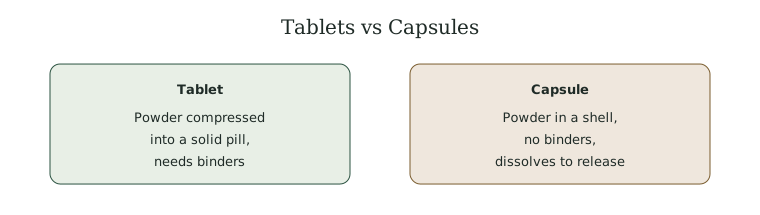
A kratom tablet is powder pressed under force into a solid pill, held together by binding agents. Unlike a capsule, which simply encloses loose powder, a tablet physically compacts the material, which requires additives to make it hold its shape. See the closely related format in the kratom capsules guide. Tablets can contain either plain leaf powder or concentrated extract, and the two are very different in strength, so knowing which you are buying is the first step.
Binder Ingredients, Honestly
The defining feature of tablets is that they need binders, and this deserves transparency. To compress powder into a stable pill, manufacturers add binding agents such as cellulose, magnesium stearate, or similar excipients. These are common, generally recognized pharmaceutical additives, but they mean a tablet is not pure leaf. You are getting kratom plus binders. For most people this is unremarkable, but anyone sensitive to specific additives should read the ingredient panel. The binders also mean that gram-for-gram, a tablet contains slightly less kratom than the same weight of pure powder, since some of its mass is the binding agent.
Dosing Precision
Tablets offer fixed, repeatable dosing, which is their main appeal alongside capsules. Each tablet is manufactured to contain a stated amount, so once you know that amount, servings are consistent. The catch is the same as with any pre-portioned format: you must know the actual kratom content per tablet, not just the tablet's total weight, since binders make up part of that weight. Ground your serving target in the kratom dosage guide, confirm the kratom content per tablet, and calculate how many you need. With extract tablets especially, the per-tablet strength can be high, so verify before assuming.
Extract Tablets vs Leaf Tablets
The single most important distinction in this format is extract versus leaf. Leaf tablets are compressed plain powder, comparable in strength to the same weight of powder minus the binders. Extract tablets are compressed concentrate, potentially many times stronger per tablet. Confusing the two is how people accidentally take far more than intended. Always confirm whether a tablet is leaf or extract, and approach extract tablets with the elevated caution any concentrate deserves. The strength difference between the two can be dramatic, and the tablet's appearance gives no hint of which you are holding.
Tablets vs Capsules
Here is how the two pill formats compare directly:
| Factor | Tablets | Capsules |
|---|---|---|
| Additives | Contains binders | Just powder and shell |
| Kratom per gram | Slightly less (binder mass) | Nearly all powder |
| Onset | Must break down first | Shell dissolves, then powder |
| Availability | Less common | Widely available |
| Comes as extract? | Yes, verify carefully | Sometimes |
Neither is clearly superior. Capsules avoid binders, tablets can be more compact. See the whole picture in the kratom format comparison, and note that both compete with newer discreet formats like kratom pouches explained.
How to Buy Tablets Well
Buy tablets on the lab result and the ingredient panel. Confirm the certificate of analysis, read the kratom content per tablet, check whether it is leaf or extract, and read the binder ingredients. Ground the fundamentals in kratom basics. A tablet's compressed, uniform appearance can hide a wide range of strengths, so the label and the lab result do the work your eyes cannot. A well-labeled leaf tablet is a fine convenience product, while an unlabeled or extract tablet demands more care.
Who Tablets Suit
Tablets fit a narrow but real niche. They suit consumers who want a compact, pre-portioned, shelf-stable format and do not mind the binders or the slightly slower breakdown. They can be more space-efficient than capsules for the same amount, which appeals to some travelers. They fit poorly for anyone avoiding additives, since the binders are unavoidable, and poorly for those wanting precise control, since the per-tablet amount is fixed. Beginners are usually better served by powder or capsules, where the contents are simpler to reason about. The honest summary is that tablets are a legitimate but uncommon convenience format, worth choosing when their specific compactness appeals to you and worth skipping when a capsule or plain powder would serve you just as well with fewer additives.
Onset and Breakdown
Tablets have a distinct onset profile worth noting. Because a tablet is compressed powder held together by binders, it must physically break down in the stomach before the kratom becomes available, which can make onset a little slower and more variable than loose powder or even capsules. The compression and the specific binders determine how quickly a tablet dissolves, and a very hard-pressed tablet may take longer than expected. The practical implication is patience. Wait the full onset window before assuming a tablet did nothing, and never take another too soon, since a delayed tablet catching up on top of a second serving can add up to more than you intended. This is the same discipline every format calls for, with a small extra margin for the breakdown time.
The Bottom Line on Kratom Tablets
Kratom tablets are compressed powder pills held together by binders, a less common alternative to capsules. The binders mean a tablet is kratom plus additives, with slightly less leaf per gram than pure powder. Their fixed dosing is convenient, but the crucial distinction is extract versus leaf, since extract tablets can be far stronger and the pill's appearance gives no clue. Buy tablets by confirming the certificate of analysis, the kratom content per tablet, and whether they are leaf or extract. For a consumer who wants a compact, pre-portioned format and does not mind the binders, tablets are a reasonable choice, provided you always know exactly what is pressed inside.
Frequently Asked Questions
What is the difference between kratom tablets and capsules?
A tablet is powder compressed with binders into a solid pill, while a capsule holds loose powder in a shell. Tablets contain additives and slightly less kratom per gram; capsules avoid binders.
Are extract tablets stronger than leaf tablets?
Yes, potentially much stronger. Leaf tablets are compressed plain powder, while extract tablets are compressed concentrate. Always confirm which you have, since the appearance gives no clue.
Do kratom tablets contain additives?
Yes. Tablets need binding agents like cellulose or magnesium stearate to hold their shape. These are common pharmaceutical additives, but they mean a tablet is kratom plus binders, not pure leaf.