
How Kratom Extract Is Made: The Process Explained (and DIY Reality)
How kratom extract is made is a genuinely interesting bit of chemistry, and understanding it helps you judge extract products and see why do-it-yourself versions usually underperform. Extraction pulls the alkaloids out of leaf and concentrates them, using water, alcohol, or more technical acid-base methods. This guide explains the main commercial methods in educational terms, shows why home extraction rarely matches commercial quality through simple yield math, and explains what this means for anyone considering making their own. It is educational rather than a how-to, since concentrates carry real cautions.
Water Extraction
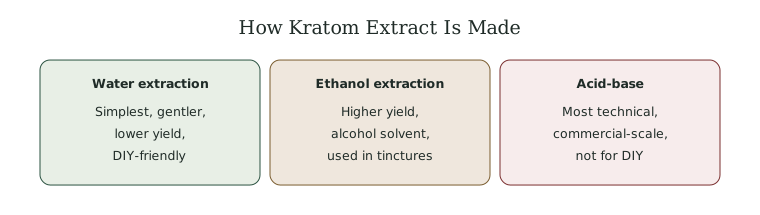
Water extraction is the simplest method and the basis of traditional tea. The alkaloids are partially water-soluble, so simmering leaf in water pulls some of them into the liquid, which can then be reduced by evaporation to concentrate it. This is essentially what a strong, reduced tea is. Its advantages are simplicity and no harsh solvents, which is why it is the most DIY-friendly method. Its limitation is a relatively low yield, since water does not extract the alkaloids as efficiently as other solvents. The broader concentrate landscape is in the kratom extracts explained. Water extraction is where most home experimenters start, for good reason.
Ethanol Extraction
Ethanol extraction uses alcohol as the solvent, which pulls the alkaloids more efficiently than water. Leaf is steeped in ethanol to dissolve the alkaloids, the plant material is filtered out, and the alcohol is reduced or evaporated to concentrate the result. This method underlies many tinctures, covered in kratom tinctures explained. Its advantage is a higher yield than water and a product that can be dosed by dropper. Its considerations include handling alcohol safely and the fact that the finished tincture carries some alcohol unless further processed. Ethanol extraction sits between simple water methods and technical commercial processes in both complexity and efficiency.
Acid-Base Extraction
Acid-base extraction is the most technical method, used commercially to produce highly concentrated extracts and isolates. It exploits how the alkaloids behave under different pH conditions to selectively pull and purify them, involving multiple steps with acids, bases, and solvents. This is genuinely chemistry-lab territory, not a kitchen process, and it is how the strongest commercial concentrates and isolates are made. The point of explaining it here is educational: understanding that the most potent extracts come from technical processes helps you appreciate why they are so concentrated and why they warrant the extra caution covered in extract vs powder. Acid-base extraction is not something to attempt at home.
Why DIY Usually Underperforms
Home extraction rarely matches commercial quality, and simple yield math explains why. Commercial extractors use efficient solvents, controlled conditions, and precise processes to pull a high proportion of the alkaloids from the leaf. A home water extraction, by contrast, captures only a fraction of what is in the leaf, so you are concentrating a partial yield. This means home extracts are often weaker and less consistent than expected, and you have spent leaf and effort to produce something a commercial extract does better. Ground the fundamentals in the kratom plant. The honest read is that home extraction is an interesting experiment but usually an inefficient way to get a concentrate.
Why People Try Home Extraction
Despite its drawbacks, home extraction appeals to people for understandable reasons worth acknowledging. Some are drawn by the economy of turning a large amount of leaf into a small, portable concentrate. Others enjoy the hands-on chemistry of the process itself, approaching it as a hobby experiment. And some want a concentrate but prefer to control what goes into it rather than buying a commercial product. These motivations are reasonable, and water extraction in particular is not dangerous to attempt. The honest caveat is simply that the results rarely match the expectation: the yield is lower than hoped, the strength is unknown without testing, and the effort often exceeds the benefit. Understanding this upfront helps anyone tempted by home extraction go in with realistic expectations rather than disappointment, and it explains why most people who try it once tend to return to tested commercial products for their concentrates.
The Consistency Problem With DIY
Beyond yield, home extraction has a consistency problem that matters for safety. Without lab testing, you cannot know the actual mitragynine content of a home extract, so its strength is a guess. This is a real concern because concentrates carry a smaller margin for error, and an unknown-strength home extract combines the higher stakes of a concentrate with the uncertainty of an untested product. Commercial extracts with a certificate of analysis at least tell you what you are taking. A home extract does not, which means dosing it is genuinely uncertain. This uncertainty, more than the yield inefficiency, is the strongest reason to be cautious about home extraction.
What This Means for You
The practical takeaway from understanding extraction is mostly about judging commercial products wisely. Knowing that extracts come from real chemical processes helps you appreciate why they are concentrated and why testing matters. Knowing that home extraction underperforms and produces unknown-strength results helps you decide it is usually not worth the effort or the uncertainty. If you want a concentrate, a tested commercial extract with a clear mitragynine figure is both stronger and safer than a home version. This educational understanding is the real value of knowing how extraction works, since it makes you a better judge of the concentrates you might buy.
The Bottom Line on Kratom Extraction
Kratom extraction concentrates the leaf's alkaloids using water, ethanol, or technical acid-base methods, each more efficient and complex than the last. Water extraction is the simple, DIY-friendly basis of strong tea, ethanol underlies many tinctures, and acid-base extraction is the commercial process behind the strongest concentrates. Home extraction usually underperforms because it captures only a fraction of the alkaloids and, more importantly, produces an unknown-strength product you cannot dose reliably. Understanding extraction is genuinely useful, but mostly for judging commercial products wisely, since a tested commercial extract is both stronger and safer than a home version whose actual potency is anyone's guess. For most people, the chemistry is a good deal more interesting to understand than it is to attempt.
Frequently Asked Questions
How is kratom extract made?
By pulling the alkaloids out of leaf and concentrating them, using water (the basis of strong tea), ethanol (used in tinctures), or technical acid-base methods (commercial concentrates and isolates).
Can you make kratom extract at home?
You can attempt water extraction, but it usually underperforms commercial methods, capturing only a fraction of the alkaloids. More importantly, without lab testing you cannot know a home extract's strength, making it uncertain to dose.
Why are commercial extracts better than homemade?
Commercial extractors use efficient processes for higher, more consistent yield, and they provide a certificate of analysis showing the mitragynine content. A home extract is weaker, less consistent, and of unknown strength.