
Lab-Tested Kratom: How to Actually Read a COA
Learning to read a certificate of analysis is the single most valuable skill in buying kratom, because it is the only way to verify what is actually in a product rather than trusting a label. A certificate of analysis, or COA, is a lab report showing a batch's potency and purity. Nearly every quality signal on this site comes back to it. This guide walks through the four things a COA must show, how to spot a fake or mismatched one, and why the lot number is the detail that ties the report to the bag in your hand.
What a COA Is
A certificate of analysis is a report from an independent laboratory that tested a specific batch of kratom. It documents how strong the product is and whether it is free of contaminants. Reputable vendors publish a COA for each product batch, since it is the proof behind any quality claim. Without one, a vendor is asking you to take their word for potency and purity, which is exactly what an unregulated market makes unwise. Choosing a vendor starts here, as covered in choosing a kratom vendor. The COA is not a marketing document, it is lab evidence, and learning to read it puts the facts in your hands.
Mitragynine Percentage
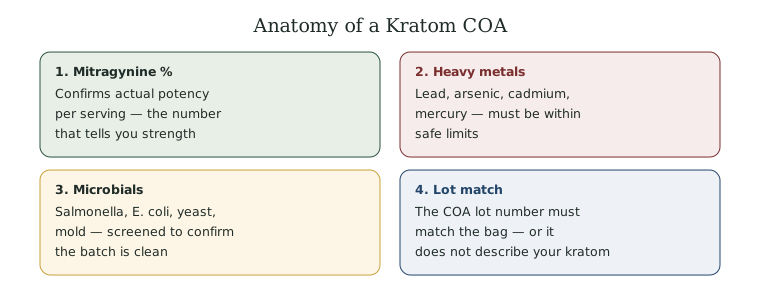
The first thing a COA shows is the mitragynine percentage, which tells you the product's actual potency. Mitragynine is kratom's primary active alkaloid, covered in mitragynine and kratom alkaloids, and its percentage is what objectively determines strength, far more reliably than any strain name or marketing claim. A typical leaf powder falls in a certain range, and the COA states the measured figure for that batch. This is why the mitragynine percentage matters more than the color or label, and it is the number that lets you compare products honestly, as explained in kratom potency facts. If a COA does not report mitragynine content, it is not telling you the most important thing.
Heavy Metals
The second essential section covers heavy metals. Because kratom is a plant that absorbs what is in its soil, it can accumulate heavy metals like lead, arsenic, cadmium, and mercury. A proper COA tests for these and reports them against safe limits. This is a genuine safety matter, not a formality, since contaminated product is a real risk in an unregulated market. A trustworthy COA shows heavy metals tested and within acceptable limits. If the heavy-metals section is missing, or the numbers exceed safe thresholds, that is a serious warning, and the product should be avoided regardless of how good its potency looks.
Microbial Screening
The third section screens for microbial contamination. Kratom can harbor harmful microorganisms like salmonella, E. coli, yeast, and mold, particularly if it was dried or stored poorly. Salmonella contamination has been a real issue in the kratom market historically, which is exactly why this testing matters. A proper COA shows these pathogens screened and the batch passing. As with heavy metals, a missing microbial section or a failing result is a serious warning. This screening is a large part of what separates a safely produced product from a risky one, and it is only verifiable through the lab report.
Spotting Fake and Mismatched COAs
Not every COA a vendor shows is trustworthy, and knowing the warning signs protects you. A fake or misleading COA might be for a different product than the one you are buying, might be outdated, might come from a questionable or unnamed lab, or might be a generic document not tied to any specific batch. The most important check is lot matching: the lot or batch number on the COA should match the lot number on the actual product you receive. A COA for a different lot does not describe your kratom, no matter how clean it looks. A vendor unwilling or unable to provide a COA whose lot matches your bag has given you a reason for caution.
The Lot-Matching Principle
The lot-matching principle deserves emphasis because it is where careful buyers separate real verification from theater. A vendor can display an impressive COA on their website, but if it is for a batch other than the one in your package, it tells you nothing about what you actually bought. Reputable vendors make it possible to match the lot number on your product to a corresponding COA, so you can confirm the report describes your specific kratom. This is the difference between a COA as genuine proof and a COA as decoration. When a lot matches, you have real evidence. When it cannot be matched, you have only a picture of someone else's lab result.
COAs and the Law
Lab testing connects directly to kratom regulation. In states that have passed the Kratom Consumer Protection Act, covered in the Kratom Consumer Protection Act, testing and labeling requirements are part of the legal framework, which raises the baseline for products sold there. Even where no such law applies, the same COA principles let you hold any vendor to a high standard yourself. Ground the fundamentals in kratom 101. Whether or not your state mandates testing, reading the COA is how you enforce quality as a consumer, since the lab report is the one document that cannot be spun by marketing.
The Bottom Line on Reading a Kratom COA
A certificate of analysis is the single most important document in buying kratom, since it is the only way to verify potency and purity rather than trusting a label. A proper COA shows four things: the mitragynine percentage that determines strength, heavy metals within safe limits, microbial screening that the batch passes, and a lot number you can match to your actual product. Fake or mismatched COAs are common, so lot matching is the crucial check that ties the report to the bag in your hand. Whether or not your state requires testing, learning to read a COA is how you enforce quality yourself, and it is the skill that underpins every other smart kratom buying decision.
Frequently Asked Questions
What should a kratom COA show?
Four things: the mitragynine percentage that determines potency, heavy metals (lead, arsenic, cadmium, mercury) within safe limits, microbial screening for salmonella, E. coli, yeast, and mold, and a lot number you can match to your product.
How do I know if a kratom COA is real?
The most important check is lot matching: the lot number on the COA should match the number on your actual product. A COA for a different lot, from an unnamed lab, or that is outdated or generic does not verify your kratom.
Why does the lot number on a COA matter?
Because a COA only describes the specific batch it tested. If the lot number does not match your product, the report tells you nothing about what you actually bought, no matter how clean it looks.