
Types of Kratom: Every Strain — Vein & Region — Explained Honestly
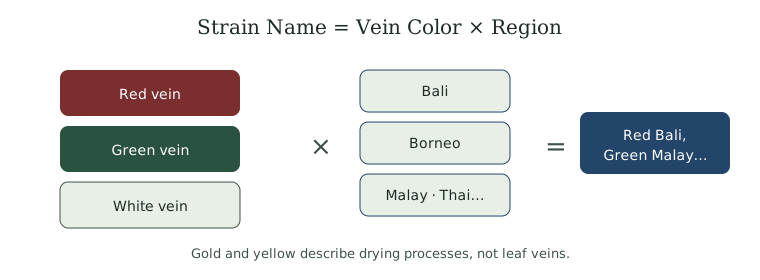
Kratom strains are named combinations of two variables: vein color and region. That is the entire system. Vein color — red, green, or white — reflects how the leaf was dried. Region — Bali, Borneo, Malay, Thai, and others — reflects claimed origin. Every product name on the market, from Red Bali to Green Malay, is one cell in that grid. Start with the fundamentals in kratom basics, if the grid is new to you.
What Actually Defines a Strain
Drying defines the color, and the color drives most of the reported differences. Processors give red vein kratom the longest, warmest drying. Processors give white vein kratom the shortest drying from earlier-harvest leaf. Green vein kratom sits between the two. Fermentation and extended drying create gold and yellow variations from those same leaves. Because drying is the real variable, two "Red Balis" from two processors can differ more than a red and a green from one processor.
The Three Vein Colors, Plus Two
There are 3 primary vein guides on this site, and 2 process-color explainers. The total is 5 color resources:
- The red vein kratom guide — the slow-drying family and its full strain roster.
- The green vein kratom guide — the middle path most new consumers start with.
- The white vein kratom guide — early-harvest leaf, shortest drying.
- gold kratom explained — an extended-drying process, not a fourth vein.
- Yellow kratom — a fermentation story covered in its own explainer.
Region Names, Decoded
Region names carry history more reliably than they carry origin. Most commercial kratom grows in Indonesian Borneo regardless of the label, because Indonesia dominates export volume. Thailand banned kratom cultivation for decades, so most "Thai" kratom is Indonesian stock carrying a style name. Bali functions the same way. Regard region names as flavor vocabulary, and weigh certificates of analysis as facts.
How Vendors Invent Strain Names
Vendors invent names for two reasons: differentiation and margin. A renamed blend can command a premium that the underlying leaf cannot. "Maeng Da" is the famous example — Thai slang deployed as a grading claim, decoded fully in what maeng da means. Trainwreck-style "full spectrum" blends are the other pattern, and kratom blends explained shows what is real about them and what is marketing.
Blends and Specialty Names
Blends deserve their own caution. A blend mixes two or more strains, sometimes for consistency and sometimes purely for a name. Full-spectrum and "trainwreck" products fall here. Blends are harder to verify, because a certificate of analysis on a blend describes the mixture, not each input. Buy a blend only from a vendor that still publishes lab results, and read the blends explainer before paying a premium for a proprietary name.
Reading a Strain Page on This Site
Every strain profile on this site follows the same honest template, so you always know what you are reading. First, the page defines the name — its vein color, its claimed region, and whatever grading myth surrounds it. Secondly, it reports character as user surveys describe it, never as a promise. Thirdly, it points to dosage and format pages rather than repeating dosing advice. Finally, it closes on certificate-of-analysis verification. Learn that template once, and all forty-plus strain pages become fast to read and hard to be fooled by.
The Consumer-Protection Angle
Strain naming is where consumers get overcharged. An invented name adds no leaf and no testing, yet it can double a price. Three habits protect you. First, translate the name into its two real inputs — vein color and claimed region. Secondly, ignore superlatives like "premium," "ultra," and "royal," which describe nothing measurable. Thirdly, demand the lab document, because the certificate of analysis is the only part of a strain name that cannot be invented.
How to Actually Choose
Choose in this order. First, pick a vein color using the honest comparison in red vs green vs white compared. Secondly, pick a vetted vendor — one that publishes lab results per lot. Thirdly, use region names as tie-breakers, not as promises. Finally, verify the certificate of analysis before money moves. The master table on the kratom strain chart links every strain profile on this site.
Frequently Asked Questions
How many types of kratom are there?
There are 3 primary vein colors — red, green, and white — plus gold and yellow process variations. Region names multiply those colors into dozens of market strains.
Are strain differences real?
Drying differences are real and drive reported character. Region names are less reliable, because most commercial kratom grows in Indonesian Borneo regardless of label.
What is the best kratom strain?
No single strain is best. Pick a vein color first, then a vendor that publishes lab results, and use region names as preference rather than promise.