
Kratom Nutrition Facts: Calories — Carbs — Fiber & Acidity
Kratom powder has almost no nutritional value, and that is the honest headline. It is a dried, ground leaf taken in small amounts, so its calories, carbohydrates, protein, and fat are all minimal. People ask about kratom nutrition for practical reasons: whether it breaks a fast, whether it adds calories, whether its acidity upsets the stomach. This page answers those questions with the caveat that formal nutrition research on kratom leaf is thin. The figures here are approximate, drawn from what dried leaf powder generally contains, and any effect labeling is honest about its limits.
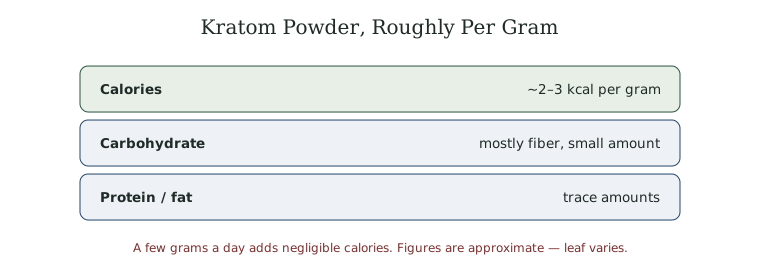
The Nutrition Panel for Leaf Powder
Kratom is a leaf, and its nutrition reflects that. Per gram of dried powder, you are looking at only a few calories, mostly from carbohydrate in the form of plant fiber, with trace amounts of protein and fat. Because typical servings are measured in a few grams, the total contribution to your daily intake is tiny. A standard serving adds calories on the order of a stick of gum, not a snack. Ground the serving context in the kratom dosage guide. The takeaway is that kratom is not a meaningful source of calories or macronutrients, and no one takes it for nutrition.
Does Kratom Break a Fast?
This is the most common nutrition question, and the honest answer is: technically yes, negligibly. A few grams of kratom powder contains a small number of calories, so by the strictest definition of a zero-calorie fast, it is not truly nothing. In practice, the calorie amount is so small that it is unlikely to disrupt the metabolic goals most people fast for, such as fat adaptation or autophagy, though the science on tiny caloric inputs and fasting is not settled. If your fast is strict, the safest answer is that kratom is not calorie-free. If you are fasting for general appetite control, a few grams is unlikely to matter much. Timing relative to food is covered in kratom and food timing.
Fiber Content
The small amount of carbohydrate in kratom powder is largely fiber, since it is ground whole leaf. This does not make kratom a fiber supplement, because the serving size is far too small to contribute meaningfully to daily fiber needs. But the fiber content does have one practical implication. Plant fiber is part of why kratom powder can feel heavy on the stomach when taken dry, and why some people prefer it brewed as tea or mixed into liquid. The fiber is not a benefit to chase or a problem to fear. It is simply a property of consuming ground leaf.
Acidity and Reflux Reports
Some people report stomach discomfort or acid reflux with kratom, and this deserves an evidence-first look rather than alarm or dismissal. Kratom itself is not strongly acidic, but taking a bitter plant powder on an empty stomach can cause nausea or discomfort for some individuals, and the practice of adding acidic mixers like citrus juice may contribute to reflux in people already prone to it. The reports are real but not universal. If you experience reflux, taking kratom with a little food, using tea instead of dry powder, and avoiding acidic mixers are reasonable adjustments. These are practical tweaks, not medical advice, and persistent stomach issues are worth raising with a doctor rather than working around indefinitely.
Calories in Extracts and Edibles
Nutrition changes with format, and it is worth noting. Plain leaf powder is nearly calorie-free at normal servings. Gummies and other edibles, however, add sugar and other ingredients to a candy base, so their calorie content comes mostly from the base, not the kratom. A daily gummy habit can add real sugar and calories in a way that plain powder never would. Read the full nutrition panel on any edible product, not just the kratom figure. The format landscape is mapped across the forms section, and the honest reading is that the kratom itself contributes little, while the delivery format can contribute a lot.
Why Nutrition Is a Minor Question
For most consumers, kratom nutrition is a footnote rather than a real concern. The leaf provides negligible calories and macronutrients, does not meaningfully feed or break a fast in most contexts, and is not taken for any nutritional purpose. The questions worth more of your attention are serving size, product testing, and interactions, all covered in depth elsewhere on this site. Ground the fundamentals in kratom 101 and see how nutrition fits the broader evidence in the kratom science resource. Nutrition is a fair question to ask, and the reassuring answer is that a few grams of leaf changes your diet almost not at all.
Nutrition Versus What Actually Matters
It helps to put kratom nutrition in perspective against the questions that genuinely affect your experience. Nutrition is a footnote because the amounts are tiny and no one takes kratom to meet dietary needs. What actually shapes a good or bad experience is serving size, product quality, and how kratom interacts with anything else you take. A precise calorie count for leaf powder tells you almost nothing useful, while the mitragynine figure on a certificate of analysis tells you a great deal. Spending worry on kratom calories while ignoring lab testing would be optimizing the wrong variable entirely. That said, the nutrition questions are worth a clear answer precisely so you can set them aside and focus on what matters. Once you know kratom adds negligible calories, does not meaningfully affect a fast for most goals, and only troubles sensitive stomachs in manageable ways, you can stop wondering about its nutrition and put your attention where it belongs, on serving discipline and verified products.
The Bottom Line on Kratom Nutrition
Kratom powder is a dried leaf with almost no nutritional footprint. Per gram it offers only a few calories, mostly as fiber, with trace protein and fat, so normal servings add a negligible amount to your diet. It technically contains a small number of calories, so a strict faster should not consider it truly calorie-free, though the amount is tiny. Its fiber can make dry powder sit heavy, and some people report reflux that simple adjustments usually ease. Edibles are a different story, since their calories come from the candy base rather than the leaf. For nearly everyone, kratom nutrition is a minor footnote, and serving size, testing, and interactions deserve far more attention.
Frequently Asked Questions
How many calories are in kratom?
Very few. Dried leaf powder has roughly 2 to 3 calories per gram, mostly from fiber, so a typical serving adds a negligible amount to your daily intake.
Does kratom break a fast?
Technically yes, but negligibly. A few grams contains a small number of calories, so it is not truly calorie-free. For most fasting goals the amount is unlikely to matter, though the science on tiny inputs is not settled.
Does kratom cause acid reflux?
Some people report stomach discomfort, though kratom itself is not strongly acidic. Taking it with a little food, using tea instead of dry powder, and avoiding acidic mixers can help those who are prone to reflux.