Borneo Kratom: The Island Behind Most Kratom on the Market
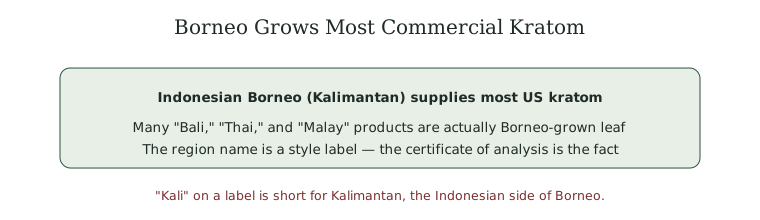
Borneo kratom is the honest name at the center of the whole market, because Borneo is where most commercial kratom actually grows. The island, and specifically the Indonesian side called Kalimantan, has the ideal equatorial climate and the established farms that supply the overwhelming majority of kratom sold in the United States. Many products labeled Bali, Thai, or Malay are really Borneo-grown leaf under a different name. Understanding Borneo means understanding the true source behind most of the strain names you will ever see.
The Region Truth
Borneo is not a marketing style. It is the actual growing region for most of the world's kratom. The Indonesian portion, Kalimantan, produces the bulk of commercial leaf, exported globally and often relabeled with other regional names along the way. Ground the plant and its geography in the kratom plant. When a product is honestly labeled Borneo, you are seeing the real source named plainly, which is more transparency than many region names offer.
Red, White, and Green Borneo
Borneo comes in every vein color, since the region name rides on top of the color system. Each has a full profile:
- red borneo kratom — the long-dried Borneo red.
- white borneo kratom — the early-harvest Borneo white.
- green borneo kratom — the middle-dried Borneo green.
The "Kali" Naming Decoded
You will see kratom labeled "Kali," and it is worth decoding. Kali is short for Kalimantan, the Indonesian region of Borneo where the leaf is grown. So Kali kratom and Borneo kratom point to essentially the same place. Vendors use the two names interchangeably, and neither implies a different plant or a promised effect. It is the same honest regional source under two labels. When you see Kali, read Kalimantan, and know you are looking at the true growing region rather than a fanciful style name.
Hulu Kapuas and Regional Sub-Names
Borneo has sub-regional names too, and Hulu Kapuas is the notable one. It refers to a specific river region within Borneo and appears in products like red hulu kapuas kratom. These sub-names carry the same honest-but-limited meaning as Borneo itself. They point to a real area, but they do not guarantee a distinct effect, and the actual quality still depends on processing and testing. Read sub-regional names as finer-grained geography, useful context that still bows to the certificate of analysis.
Reported Character and Serving
User surveys describe Borneo kratom in line with whatever color it carries, since the region name does not change the leaf. A Red Borneo reads like other reds, a White Borneo like other whites. These are self-reports, not proven effects. The serving math is identical to any other kratom, so start with a small weighed serving from the kratom dosage guide and adjust slowly. Borneo's honest sourcing is a point in its favor, but it does not change how carefully you should approach the serving.
How to Buy Borneo Well
Buy Borneo on the lab result, as with any kratom. Read the mitragynine percentage on the certificate of analysis, confirm the lot number, and check the contaminant screens. Browse the full lineup in types of kratom. Borneo has one honest advantage worth valuing: the name tells the truth about where the leaf grew. But truthful sourcing is only the start. The certificate of analysis still decides whether a specific Borneo product is worth buying, and it remains the number that matters most.
Why Honest Sourcing Matters
Borneo's honest naming is a genuine advantage in a market full of misleading labels, and it is worth understanding why. Most region names in kratom are style labels detached from true origin, so a buyer rarely knows where their leaf actually grew. Borneo bucks that trend by naming the real growing region plainly. That transparency does not guarantee quality, but it does remove one layer of marketing fog. A consumer who chooses honestly sourced Borneo at least knows the geography behind the product, which is more than many strain names offer. Transparency in sourcing tends to correlate with transparency elsewhere, including testing, which is a reasonable if imperfect signal of a vendor worth trusting.
Borneo in Your Buying Decision
When Borneo appears in your options, weigh it as a product with one built-in advantage and the same core requirement as everything else. The advantage is the honest name. The requirement is the certificate of analysis, which decides quality regardless of how truthful the label is. Choose powder for control and value, buy a modest quantity to start, and read the mitragynine figure before paying. Keep notes on your response across a couple of days. Borneo rewards the same careful approach every kratom purchase deserves, with the small bonus that you actually know where the leaf came from. That combination of honest sourcing and verified testing is close to the ideal a careful buyer should look for.
The Bottom Line on Borneo Kratom
Borneo kratom is the real source behind most of the market, grown in Indonesian Kalimantan and often relabeled with other regional names. It comes in every color, with the region name riding on top of the color system, and it appears under related labels like Kali and sub-regional names like Hulu Kapuas. Borneo's genuine advantage is honest sourcing, since the name names the true growing region. That transparency is worth valuing, but it does not replace testing. Judge any Borneo by its certificate of analysis, and you get both an honestly sourced product and a verified one. In a market where most region names mislead, that combination of a truthful label and a real lab result is about as close to a trustworthy starting point as kratom shopping offers. Value the honesty, verify the testing, and Borneo becomes one of the few region names you can take at close to face value. That alone makes it a smart default for a buyer who wants to spend less energy decoding labels and more energy reading lab results. In a category built on misleading geography, an honest region name is a small but real form of consumer protection.
Frequently Asked Questions
Where does Borneo kratom come from?
Borneo kratom comes from the island of Borneo, specifically the Indonesian region called Kalimantan, which grows most of the world's commercial kratom. It is the real source behind many other strain names.
What does Kali kratom mean?
Kali is short for Kalimantan, the Indonesian part of Borneo where the leaf is grown. Kali kratom and Borneo kratom point to essentially the same place and are used interchangeably.
Is Borneo kratom better than Bali?
Neither is inherently better. Borneo is the honest source name, while much Bali kratom is also Borneo-grown under a style label. Judge both by the certificate of analysis rather than the region name.