How to Choose a Kratom Vendor: The 9-Point Vetting System
Choosing a kratom vendor well is the decision that determines the quality and safety of everything you buy afterward, and in an unregulated market it falls entirely to you. The good news is that vetting a vendor comes down to a clear checklist of things a trustworthy seller does and a risky one skips. This guide lays out the full vendor vetting system, from the non-negotiable testing requirements to the strong positive signals and the clear red flags, so you can separate a vendor worth your money from one worth avoiding.
The Non-Negotiables
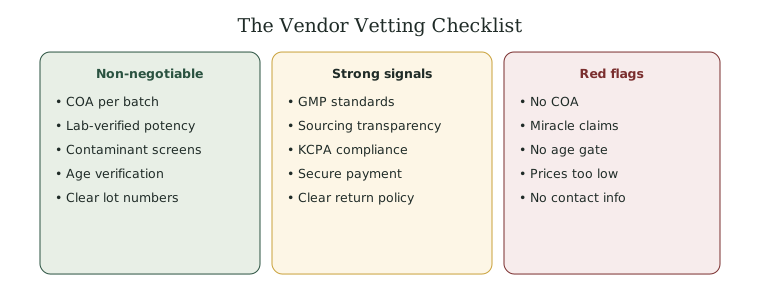
Some vendor requirements are absolute, and a seller failing any of them should be ruled out. First and foremost is a certificate of analysis for each batch, the foundation of everything, covered in how to read a kratom COA. This means lab-verified potency, screening for heavy metals and microbial contaminants, and lot numbers you can match to your product. Age verification is also non-negotiable, since a responsible vendor confirms buyers are adults. A vendor who cannot provide a batch-matched COA or who sells without any age gate has failed the basic test, no matter how appealing the rest of their presentation looks. These are the requirements that come before all others.
Strong Positive Signals
Beyond the non-negotiables, several signals mark a genuinely good vendor. Adherence to good manufacturing practice standards indicates careful production. Sourcing transparency, where a vendor is open about where their kratom comes from, reflects confidence and accountability. Compliance with the Kratom Consumer Protection Act in states that have it, covered in the laws section, shows the vendor meets a legal quality baseline. Secure payment processing protects your financial information, and a clear, fair return policy signals a vendor that stands behind its products. None of these alone proves quality, but together they paint a picture of a professional, accountable operation rather than a fly-by-night seller.
The Red Flags
Certain signs should make you walk away regardless of anything else. No certificate of analysis is the biggest red flag, since it means you cannot verify anything. Health or miracle claims are both illegal and a sign of a seller who ignores the rules, since legitimate vendors do not make disease claims. No age verification signals irresponsibility. Prices that are suspiciously low, well below the fair range, often indicate untested or low-quality product, since real testing costs money, as covered in what kratom costs. Missing contact information, no physical address, and no clear company identity all suggest a vendor you cannot hold accountable. Any one of these is a reason for serious caution.
Verifying Reviews Honestly
Reviews can help, but only if you read them critically, since they are easy to fake. A wall of uniformly perfect five-star reviews with vague praise is less trustworthy than a mix that includes some specific, detailed, and even mildly critical feedback, which reads as authentic. Look for reviews that mention specifics like lot testing, customer service experiences, and product consistency rather than generic enthusiasm. Third-party review platforms and community discussions can offer a more honest picture than a vendor's own curated testimonials. Weigh reviews as one input among many, weighted less heavily than the objective checklist items, since a vendor can buy or fabricate praise but cannot fake a legitimate batch-matched COA.
Putting the Checklist to Work
Using this checklist is straightforward in practice. Before buying from any vendor, confirm they publish a batch-matched COA, verify they have an age gate, and scan for the strong signals and red flags above. If the non-negotiables are met and several positive signals are present with no red flags, the vendor is worth considering. If any non-negotiable is missing or any serious red flag appears, move on, since there are enough good vendors that you never need to settle for a questionable one. See the fuller landscape in best kratom brands reviewed and the broader resource hub at kratom buyer resources. Ground the fundamentals in kratom basics.
Where to Actually Buy
Once you know how to vet a vendor, the question of where to buy follows naturally. Online vendors who meet this checklist are generally the most reliable source, since they are the ones most likely to publish COAs and maintain professional standards, as covered in where to buy kratom safely. Local options vary widely in quality, and the vetting principles still apply even in person. The checklist travels with you regardless of where you shop: the same non-negotiables, signals, and red flags separate good from bad whether you are buying from a website or standing in a store. Knowing the checklist is what makes you a safe buyer anywhere.
Why This Falls to You
It is worth being clear about why vendor vetting matters so much with kratom specifically. Because kratom is unregulated at the federal level, there is no government agency verifying that any given product is accurately labeled, properly tested, or free of contaminants. That verification role, which regulation would normally fill, falls entirely to the consumer. This is not a reason for alarm, but it is a reason for diligence, since the difference between a good vendor and a bad one is the difference between a tested, accurately labeled product and an unknown one. The checklist in this guide is essentially the job a regulator would do, handed to you. Learning to apply it turns you from a passive buyer trusting a label into an active one verifying the facts, which is exactly the posture an unregulated market requires. Once the checklist becomes second nature, vetting a vendor takes only a few minutes, and those minutes are the best protection available in a market without a safety net.
The Bottom Line on Choosing a Kratom Vendor
Choosing a kratom vendor comes down to a clear checklist in an unregulated market where the vetting falls to you. The non-negotiables are a batch-matched certificate of analysis with contaminant screening and an age gate, and any vendor failing these should be ruled out. Strong signals like GMP standards, sourcing transparency, KCPA compliance, secure payment, and fair returns mark a professional operation. Red flags like no COA, miracle claims, suspiciously low prices, or missing contact information mean walk away. Read reviews critically, weighting objective checklist items far above them. Apply this system before every purchase, and you will consistently find vendors worth your trust while avoiding the ones that are not.
Frequently Asked Questions
How do I choose a good kratom vendor?
Confirm the non-negotiables first: a batch-matched certificate of analysis with contaminant screening and an age gate. Then look for strong signals like GMP standards, sourcing transparency, and KCPA compliance, and avoid red flags.
What are red flags for a kratom vendor?
No certificate of analysis, health or miracle claims, no age verification, suspiciously low prices, and missing contact information or company identity. Any one of these is a reason for serious caution.
Can I trust kratom vendor reviews?
Only if you read them critically. Uniformly perfect vague reviews are less trustworthy than a mix with specific, detailed feedback. Weight objective checklist items like a batch-matched COA far above reviews, which can be faked.