
Kratom Kilos: What a Kilogram Really Costs and How to Buy One Safely
Buying kratom by the kilo is the largest common bulk purchase, offering the steepest per-gram discount for heavy regular users. A kilo is a serious commitment, both in quantity and in the trust you place in the vendor, since a kilo of poor or untested kratom is a large and expensive mistake. This guide covers fair kilo pricing and the red-flag floor below which a price signals trouble, the cheap-kilo trap of untested imports, split-kilo strategies, and the freshness math that determines whether a kilo makes sense for you.
Kilo Price Benchmarks
A kilo, one thousand grams, is the largest standard bulk unit, and it carries the lowest per-gram price of any quantity. Fair kilo pricing sits in a reasonable range that reflects tested, quality product at a volume discount, as covered in what kratom costs. The important number is not just the fair range but the red-flag floor: a price far below what quality tested product can be sold for. Because a kilo is a large quantity, even a modest per-gram discount from a legitimate vendor produces a satisfying total saving, so there is no need to chase the absolute cheapest kilo. A price in the fair range from a testing vendor is the target.
The Cheap-Kilo Trap
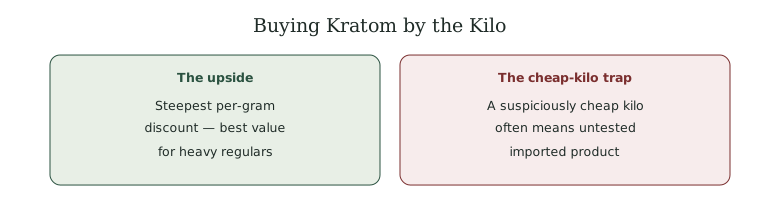
The most important warning about kilos is the cheap-kilo trap. When a kilo is priced dramatically below the fair range, the most likely explanation is untested, low-quality, or carelessly imported product. Legitimate testing, quality control, and clean sourcing cost money, and those costs do not disappear at volume, so a suspiciously cheap kilo usually means one of them was skipped, as covered in how to read a kratom COA. The large quantity makes this especially dangerous, since you are committing to a lot of product that may be contaminated or weak. A bargain kilo is the single easiest way to end up with a large amount of kratom you cannot trust, which is why the price floor matters so much here.
Split-Kilo Strategies
One smart way to approach kilos is splitting them, which addresses both cost and freshness. Some regular users split a kilo with a trusted friend, halving the quantity each person must finish while still capturing much of the per-gram discount. Others buy a kilo and immediately divide it into portions for storage, freezing most and keeping a working amount fresh, covered in storing kratom properly. Splitting a kilo either between people or into stored portions is how experienced buyers get the kilo discount without the freshness risk of a single large open bag. It turns the kilo's main drawback, the challenge of finishing it fresh, into a manageable one.
The Freshness Math for a Kilo
Whether a kilo makes sense comes down to freshness math, and a kilo is a lot of kratom. Estimate your honest monthly usage, then calculate how many months a kilo would last. For a heavy daily user, a kilo might last a few months and stay reasonably fresh. For a moderate user, a kilo could take most of a year to finish, meaning the later portion degrades before use, undercutting the saving. The broader logic is covered in buying kratom in bulk. Unless you use enough to finish a kilo within a reasonable window, or you split or freeze it, a smaller bulk quantity is often the wiser buy despite the slightly higher per-gram price.
Testing a Kilo Purchase
The testing requirement is non-negotiable at the kilo level, more than at any other. Before committing to a kilo, confirm the vendor provides a batch-matched certificate of analysis showing verified potency and clean contaminant screens. The financial and practical stakes of a large purchase make it tempting to rationalize using an untested kilo rather than waste the money, which is exactly the trap to avoid. A vendor selling kilos should be among the most transparent about testing, since serious bulk buyers demand it. If a kilo seller cannot or will not provide a matching COA, that is a decisive reason to walk away, regardless of how attractive the price looks.
Who Should Buy Kilos
Kilos suit a narrow group. They fit heavy, steady daily users who will finish a kilo while fresh, buyers who split with a trusted friend, and those with proper storage including freezer space for portions. They fit poorly for occasional, moderate, or new users, who would take far too long to finish a kilo and are much better served by smaller quantities. Ground the fundamentals in kratom basics. The honest summary is that a kilo is the best value for the right heavy user with good storage and a trusted testing vendor, and an expensive freshness gamble for anyone else.
Vetting a Kilo Vendor
Because a kilo is such a large commitment, the vendor behind it deserves extra scrutiny beyond even the usual checklist. A vendor worth a kilo purchase should have an established track record, transparent sourcing, and a clear willingness to provide batch-matched testing on demand. It is wise to have bought smaller quantities from a vendor first, confirming their consistency and quality, before committing to a kilo from them. Buying your first order from a vendor as a kilo, based only on an attractive price, reverses the sensible order of trust, since you are placing a large bet on an unproven source. The best approach is to regard a kilo as a purchase you graduate to with a vendor you have already vetted through smaller orders, not an entry point with a stranger. This patient approach costs a little more upfront in smaller test purchases but protects you from the far larger cost of a bad kilo from a vendor you never properly verified.
The Bottom Line on Buying Kratom Kilos
Buying kratom by the kilo offers the steepest per-gram discount, making it the best value for heavy, steady users who can finish it fresh. The crucial warning is the cheap-kilo trap: a kilo priced far below the fair range usually means untested, low-quality product, and the large quantity makes that especially costly. Split kilos between people or into frozen portions to manage freshness, do the honest usage math before committing, and never skip the batch-matched certificate of analysis, which matters most at this scale. Kilos suit heavy users with good storage and a trusted testing vendor, and they are a poor gamble for occasional buyers who would let most of it degrade.
Frequently Asked Questions
How much does a kilo of kratom cost?
A kilo carries the lowest per-gram price of any quantity, in a fair range reflecting tested product at a volume discount. Watch the red-flag floor: a price far below that range usually signals untested, low-quality product.
Why is cheap kilo kratom risky?
A kilo priced dramatically below the fair range usually means untested, low-quality, or carelessly imported product, since testing and quality control cost money at any volume. The large quantity makes a cheap kilo especially costly.
Should I buy a kilo of kratom?
Only if you are a heavy, steady user who can finish it fresh, or you split it with a friend or freeze portions. Occasional and moderate users would let most of a kilo degrade and are better served by smaller quantities.