
The Kratom Consumer Protection Act (KCPA) Explained
The Kratom Consumer Protection Act, or KCPA, is model legislation that regulates kratom for safety rather than banning it, and it represents the consumer-friendly approach a growing number of states have adopted. Rather than prohibition, the KCPA sets rules for testing, labeling, age limits, and banned adulterants, raising the baseline for products sold in states that pass it. Understanding what the KCPA requires, which states have adopted it, and why it matters compared to an outright ban helps you understand both the regulatory landscape and what protections you have where you live.
What the KCPA Requires
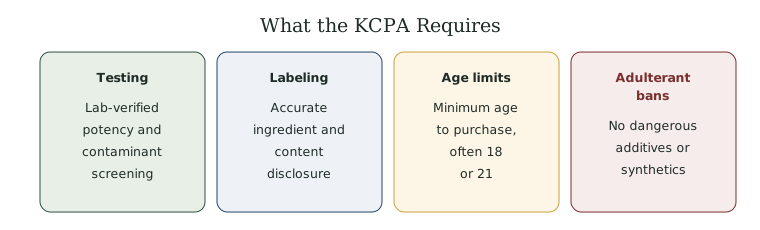
The KCPA typically sets four kinds of requirements, though details vary by state. It requires testing, meaning products must be lab-verified for potency and screened for contaminants. It requires accurate labeling, so consumers can see what they are buying, including alkaloid content and ingredients. It sets a minimum age to purchase kratom, commonly eighteen or twenty-one depending on the state, covered further in kratom age requirements. And it bans dangerous adulterants, prohibiting the sale of kratom products spiked with harmful additives or with dangerously high levels of certain compounds. Together these requirements aim to make legal kratom safer and more transparent.
The Testing Requirement
The testing provision is where the KCPA connects most directly to everyday buying. By requiring lab-verified potency and contaminant screening, the KCPA effectively mandates the kind of certificate of analysis that careful consumers already look for, covered in how to read a kratom COA. In a KCPA state, testing is not just a quality signal from good vendors but a legal requirement, which raises the floor for every product sold there. This is a meaningful protection, since it targets exactly the untested, unknown-quality products that pose the most risk in an unregulated market. The testing requirement is arguably the most consumer-protective part of the act.
The Adulterant Ban
The adulterant provision addresses one of the most serious risks in the kratom market. The KCPA typically bans products adulterated with dangerous substances or containing dangerously high concentrations of certain compounds, including limits related to concentrated 7-hydroxymitragynine. This matters because adulterated and heavily concentrated products are among the riskiest on the market, and a legal ban on them removes the worst offenders from KCPA-state shelves. This provision reflects a recognition that not all products marketed as kratom are equivalent, and that the concentrated, spiked, or synthetic ones warrant specific prohibition even where leaf kratom remains legal.
Which States Have Adopted It
A growing number of states have passed some version of the KCPA, and the list has expanded over the years as more states choose regulation over prohibition. Because the exact states and the specifics of each state's version change as legislation advances, the current list is best confirmed against the up-to-date picture in the kratom legality map and official sources. The trend has generally been toward more states adopting consumer-protection approaches rather than bans, though this can shift. What matters for you is checking whether your own state has a KCPA in place, since that determines the legal protections on the products you can buy locally.
Why It Matters Versus a Ban
The KCPA represents a fundamentally different philosophy from an outright ban, and the contrast is worth understanding. A ban makes kratom illegal, pushing consumers who still want it toward unregulated or out-of-state sources with no safety oversight at all. The KCPA instead keeps kratom legal while regulating it for safety, which advocates argue better protects consumers by ensuring the products they buy are tested, labeled, and free of dangerous adulterants. From a consumer-protection standpoint, a regulated legal market offers oversight that a ban cannot, since a banned substance is simply unregulated rather than absent. This is the core argument for the KCPA approach over prohibition.
What It Means for You
For a consumer, living in a KCPA state means real, legally-backed protections on the kratom you buy. Products should be tested, accurately labeled, and free of banned adulterants, and there should be an age requirement in place. This does not eliminate the need to vet vendors and read certificates of analysis yourself, since compliance and enforcement vary, but it raises the baseline meaningfully. In a non-KCPA state, the same protections fall entirely to you as the consumer. Either way, understanding the law where you live tells you what floor exists beneath the products you can buy. Ground the fundamentals in kratom basics, and follow developments through kratom legislation news.
The Role of Advocacy
The spread of the KCPA is largely the result of consumer advocacy, which is worth understanding as part of the story. Organizations advocating for kratom consumers have promoted the KCPA as model legislation precisely because it offers a middle path between prohibition and a completely unregulated market. The argument advocates make is that sensible regulation protects consumers while preserving access, and that a tested, labeled, age-restricted legal market serves public safety better than either a ban or an anything-goes free-for-all. This advocacy has helped move a number of states toward adoption over the years. Whatever one's view of kratom, the KCPA represents an attempt to bring order and safety standards to a product that would otherwise be sold with no oversight at all, and understanding that this is a deliberate consumer-protection strategy clarifies why the act takes the specific form it does, focusing on testing, labeling, age, and adulterants rather than restriction of the plant itself.
The Bottom Line on the Kratom Consumer Protection Act
The Kratom Consumer Protection Act is model legislation that regulates kratom for safety rather than banning it, requiring testing, accurate labeling, age limits, and bans on dangerous adulterants. A growing number of states have adopted some version of it, choosing regulation over prohibition. Compared to an outright ban, the KCPA keeps kratom legal while establishing consumer protections that a banned, unregulated market cannot offer, which is the central argument in its favor. For consumers, a KCPA state means legally-backed testing and labeling standards on the products they buy, though vetting vendors yourself still matters. Check whether your state has adopted it, and confirm the current picture through official sources, since this landscape continues to evolve.
Frequently Asked Questions
What is the Kratom Consumer Protection Act?
Model legislation that regulates kratom for safety rather than banning it. It typically requires lab testing, accurate labeling, minimum age limits, and bans on dangerous adulterants, raising the baseline for products sold in adopting states.
What does the KCPA require?
Four main things: lab-verified testing for potency and contaminants, accurate labeling of ingredients and content, a minimum purchase age (often 18 or 21), and bans on dangerous adulterants and dangerously concentrated compounds.
Why is the KCPA better than a kratom ban?
Advocates argue a ban pushes consumers toward unregulated sources with no oversight, while the KCPA keeps kratom legal but ensures products are tested, labeled, and free of dangerous adulterants, offering protections a banned market cannot.