
Kratom Edibles: Chocolate — Candy — Taffy & Honey Sticks Explained
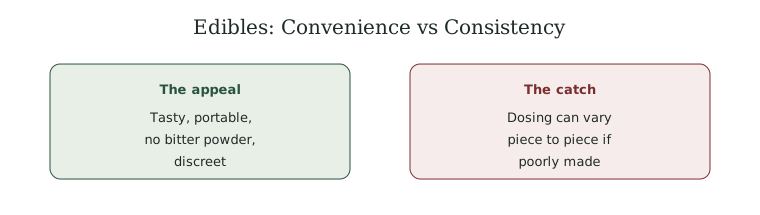
Kratom edibles are food products infused with kratom extract, from gummies to chocolates to honey sticks. They make kratom tasty, portable, and discreet, removing the bitterness of raw powder entirely. The trade-off is dosing consistency: an edible is only as reliable as the care taken in making it, and poorly made edibles can vary from piece to piece. Understanding the edible category, the honest dosing warning, and the labeling red flags helps you separate a legitimate convenience product from an unreliable novelty.
The Edible Category
Kratom edibles span a range of food formats. Gummies are the most common, covered in detail in the kratom gummies guide. Beyond gummies, the category includes chocolates, taffy and other candies, and honey sticks, each infusing kratom extract into an edible base. All of them share the same basic construction: a concentrated kratom extract blended into food, portioned into individual pieces. Because the active material is a concentrate, a single edible can carry a meaningful serving, which is why the per-piece amount matters so much.
The Dosing Consistency Problem
The honest warning with edibles is about consistency. When kratom extract is blended into a food base, the active material must be distributed evenly for each piece to contain the same amount. Well-made edibles achieve this. Poorly made ones do not, meaning one gummy in a batch might be stronger than another. This uneven distribution is a real risk with lower-quality edibles, and it is invisible from the outside. The defense is buying from manufacturers who test finished products and publish per-piece mitragynine figures, so the consistency is verified rather than assumed.
Profiles of Common Edibles
The common edible types differ mainly in their base. Chocolate and candy edibles mask kratom's taste well but add sugar and fat. Taffy and chews are portable and long-lasting but similarly sugary. Honey sticks offer a smaller, simpler format with honey as the base. Across all of them, the food base is where the calories and extra ingredients live, while the kratom content is what actually matters for effect. The nutrition side is covered in the broader discussion of kratom products, and the practical point is to read the full ingredient panel, not just the kratom claim.
Novelty vs Utility
It is worth asking honestly whether an edible is a useful format or just a novelty. For someone who wants a tasty, discreet, portable way to take a consistent serving, a well-made edible has genuine utility. For someone optimizing cost or precise control, an edible is an expensive, less-adjustable novelty compared to powder. The format shines for convenience and taste and struggles on value and precision. Neither judgment is universal. The question is whether the specific benefits of an edible match what you actually want from your kratom.
Labeling Red Flags
Edible labels carry specific warning signs worth knowing. A vague milligram claim like "500mg" that does not specify milligrams of mitragynine is a red flag, since it may refer to total extract weight instead of active content. No certificate of analysis is a serious warning, since edibles hide their contents completely. A missing or incomplete ingredient panel obscures what else you are eating. And packaging that resembles ordinary candy raises real child-safety concerns that responsible brands avoid. Read the how to read a kratom COA guide to vet the testing behind any edible.
How to Buy Edibles Well
Buy edibles on the numbers, not the packaging. Confirm the milligrams of mitragynine per piece, verify the certificate of analysis covers the finished product, read the full ingredient panel, and compare the price per milligram against powder. Ground your serving target in the kratom dosage guide and the fundamentals in kratom 101. A well-tested edible with clear per-piece figures is a legitimate convenience product. One without testing is candy with an unknown and possibly uneven amount of kratom inside.
Who Edibles Suit
Edibles fit a clear kind of consumer and poorly serve others. They suit people who want a tasty, discreet, portable serving and who dislike the bitterness of powder, provided they buy from a tested source with clear per-piece figures. They fit poorly for cost-conscious buyers, since edibles carry a large markup over powder for the same mitragynine. They also fit poorly for anyone who wants precise, adjustable control, since an edible locks in a fixed amount per piece. And they are a poor first format for a beginner still learning their baseline, since the fixed serving removes the fine control that weighing powder provides. The honest advice is that edibles are a convenience-and-taste product, excellent for the person who values those things and buys carefully, and unnecessary for the consumer optimizing cost or control.
The Child-Safety Concern
One issue deserves emphasis beyond ordinary buying advice: child safety. Kratom edibles that look like ordinary candy pose a real risk to children who cannot tell the difference, and any concentrated kratom product is inappropriate and potentially dangerous for a child. Responsible manufacturers use clearly adult-oriented, child-resistant packaging and avoid designs that mimic popular candies. As a consumer, store edibles well out of reach of children, keep them in their labeled packaging, and avoid products whose packaging seems designed to appeal to kids. This is not a marketing point but a genuine safety obligation that applies to every household where kratom edibles are present.
The Bottom Line on Kratom Edibles
Kratom edibles infuse extract into food, from gummies to chocolates to honey sticks, offering taste, portability, and discretion. Their central weakness is dosing consistency, since uneven distribution in poorly made products can make one piece stronger than another. The category rewards manufacturers who test finished products and publish per-piece mitragynine figures, and it punishes buyers who trust vague milligram claims and candy-like packaging. See the whole landscape in the kratom format comparison. Judge any edible by its certificate of analysis, its per-piece mitragynine content, and its full ingredient panel. For the consumer who values a tasty, discreet, consistent serving and buys from a tested source, edibles work. For everyone else, plainer formats offer more control for less money.
Frequently Asked Questions
Are kratom edibles reliable for dosing?
Only if well made. When extract is blended into food, it must be distributed evenly for each piece to match. Poorly made edibles can vary piece to piece, so buy from manufacturers who test finished products.
What kratom edibles are available?
Gummies are the most common, alongside chocolates, taffy and other candies, and honey sticks. All infuse kratom extract into a food base and portion it into individual pieces.
What should I check on a kratom edible label?
Confirm milligrams of mitragynine per piece (not just total extract weight), a certificate of analysis for the finished product, and a full ingredient panel. Avoid vague claims and candy-like packaging.