
Akuamma vs Kratom: The West African Seed Compared Honestly
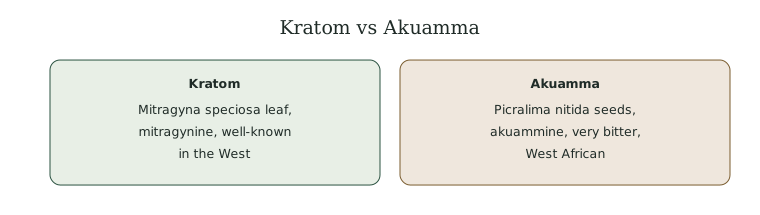
Kratom and akuamma are two different botanicals sometimes discussed together because both have traditional uses for discomfort, but they are distinct plants with different active compounds. Kratom is the leaf of Mitragyna speciosa from Southeast Asia, while akuamma is the seed of Picralima nitida from West Africa. Their alkaloids differ, akuammine versus mitragynine, and akuamma is notably more bitter. This comparison covers what akuamma is, how its alkaloids compare to kratom's, how its reported character differs, its taste, and how it fits the broader landscape of kratom-adjacent botanicals.
What Akuamma Is
Akuamma comes from the seeds of Picralima nitida, a tree native to West Africa, where the seeds have a history of traditional use. Unlike kratom, which uses the leaf, akuamma products come from the seed, usually ground into a powder. It occupies a similar niche to kratom in some discussions, a plant-based traditional botanical, but it is a genuinely different plant from a different region. See the broader science context in the kratom science resource. Akuamma is far less well known in the West than kratom, and much less studied, so information about it is more limited.
The Alkaloid Comparison
The active compounds are where the two plants diverge chemically. Kratom's primary alkaloid is mitragynine, which acts on opioid and other receptors. Akuamma's main alkaloid is akuammine, a structurally different compound. While both plants contain alkaloids with some receptor activity, akuammine and mitragynine are distinct molecules with different profiles, so the two plants are not chemically interchangeable. This difference in active compounds is the core reason akuamma and kratom are separate botanicals rather than variations on a theme. Anyone assuming akuamma is simply an African kratom would be missing this fundamental chemical distinction.
Reported Character
The reported character of akuamma differs from kratom, framed honestly as anecdote rather than established fact. Because akuamma is so much less studied and less used in the West, reliable information about its effects is thinner than for kratom, and what exists is largely anecdotal. Users who compare the two generally describe akuamma as having its own distinct character rather than mirroring kratom. The honest position is that akuamma's effects are not well documented, so anyone exploring it is working with even less information than the already-limited evidence base for kratom. Ground your serving approach for kratom in the kratom dosage guide, and understand that akuamma lacks even that level of community-documented guidance.
The Taste Warning
Akuamma comes with a notable taste warning: it is extremely bitter, often described as more intensely bitter than kratom, which is itself no one's idea of pleasant. This intense bitterness is a practical obstacle to using akuamma, and it is one of the more commonly mentioned features of the seed. Where kratom's bitterness is manageable with the various methods people use, akuamma's stronger bitterness makes it even harder to take palatably. This is a small but real consideration for anyone curious about the seed, and it is worth knowing upfront rather than discovering unpleasantly.
The Format Landscape
Akuamma fits into a small landscape of kratom-adjacent botanicals that curious consumers sometimes explore. Alongside it sit plants like kanna, covered in the kanna vs kratom compared page, each a distinct botanical with its own traditional use and chemistry. The common thread is that these are separate plants often compared to kratom rather than substitutes for it. Ground the fundamentals in what kratom is. For most people researching kratom, akuamma is mainly of interest as a point of comparison that highlights how kratom sits among other traditional botanicals, each with its own distinct identity.
The Bottom Line on Kratom vs Akuamma
Kratom and akuamma are distinct botanicals from different continents, kratom the leaf of a Southeast Asian tree and akuamma the seed of a West African one. Their active alkaloids differ, mitragynine versus akuammine, so they are not chemically interchangeable. Akuamma is far less studied and less used in the West, meaning reliable information about its effects is thin and largely anecdotal, and it is notably more bitter than kratom. It sits alongside other kratom-adjacent botanicals like kanna as a separate plant often compared to kratom rather than a substitute for it. For most people, akuamma is mainly useful as a comparison that clarifies kratom's distinct identity among traditional botanicals. Knowing how akuamma differs helps you appreciate that kratom is one specific plant with its own chemistry, not a generic category of botanical. That clarity is worth more to most readers than akuamma itself, which remains a niche curiosity by comparison.
Frequently Asked Questions
Is akuamma the same as kratom?
No. Kratom is the leaf of Mitragyna speciosa from Southeast Asia with mitragynine, while akuamma is the seed of Picralima nitida from West Africa with akuammine. They are different plants with different active compounds.
What does akuamma taste like?
Akuamma is extremely bitter, often described as more intensely bitter than kratom, which is itself quite bitter. This strong bitterness is a practical obstacle to taking it palatably.
Is akuamma well studied?
No. Akuamma is far less studied and less used in the West than kratom, so reliable information about its effects is thin and largely anecdotal, even less than the already-limited evidence base for kratom.