
Kanna vs Kratom: The South African Botanical Compared
Kratom and kanna are two different botanicals sometimes compared because both are plant-based mood and wellness products, but they are pharmacologically distinct and come from opposite sides of the world. Kratom is Mitragyna speciosa from Southeast Asia, while kanna is Sceletium tortuosum from South Africa. They act on different systems, kratom on opioid and other receptors and kanna primarily on serotonin. This comparison lays out the botanical differences, the mechanism distinction, what fermented kanna means, and how their legal situations differ, so you can understand how genuinely different these two plants are.
The Botanical Comparison
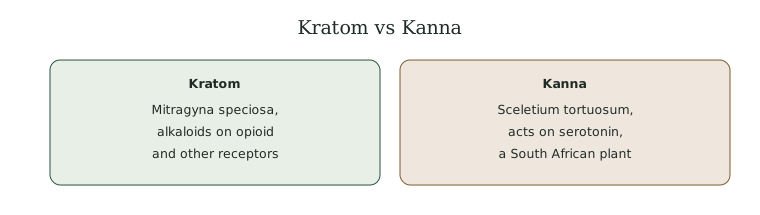
Kratom and kanna are unrelated plants. Kratom, Mitragyna speciosa, is a tree in the coffee family native to Southeast Asia, covered in the kratom science resource. Kanna, Sceletium tortuosum, is a small succulent plant native to South Africa, traditionally chewed or fermented by indigenous peoples. They belong to entirely different plant families, grow in different climates, and have different traditional uses. The only real similarity is that both are plant-based products used for mood or wellness, which is why they occasionally get mentioned together despite having little else in common.
The Mechanism Difference
The pharmacological difference is the most important distinction. Kratom's alkaloids, chiefly mitragynine, act on opioid receptors along with adrenergic and serotonergic systems, giving it its characteristic effects. Kanna works primarily through serotonin, with its main compounds acting as serotonin reuptake inhibitors, a mechanism more comparable in general category to how some mood-oriented compounds work. This means the two produce different kinds of effects through different pathways. Anyone assuming kanna is a kratom substitute or that they work similarly would be mistaken. The mechanisms are distinct enough that the plants are not interchangeable, and their effects reflect those different underlying actions.
Fermented Kanna Explained
One aspect of kanna worth explaining is fermentation, since it has no direct kratom parallel. Traditionally, kanna is often fermented, a process that changes its alkaloid profile and is thought to affect its properties. This fermentation step is part of kanna's traditional preparation and distinguishes it from simply dried plant material. Kratom, by contrast, is typically just dried and ground without fermentation, though bentuangie kratom involves a fermentation-like process. The point of mentioning fermented kanna is to illustrate that kanna has its own distinct traditional preparation methods, further underscoring that it is a separate botanical with its own history rather than a kratom analog.
Legal Status Differences
The legal situations of the two plants differ and are worth noting briefly. Kratom's legal status varies by location and is the subject of ongoing regulatory attention in many places. Kanna is generally less regulated and less widely known, occupying a quieter corner of the botanical market. Because both plants' legal situations can change and vary by location, anyone interested in either should check their local laws directly. For a related botanical comparison, see the akuamma vs kratom page. The broader point is that these are two different plants with two different regulatory pictures, not variations on the same product.
Which Might Suit Different People
Because they work so differently, kratom and kanna suit different interests. Someone drawn to kratom's particular profile of effects would not necessarily find the same thing in kanna, and vice versa, since their mechanisms diverge. Neither is a straightforward replacement for the other. Ground the fundamentals in kratom basics. The honest framing is that these are distinct botanicals to consider on their own terms rather than as alternatives to one another. If you are researching one, understanding the other mainly helps clarify how different they are, so you can pursue whichever actually matches what you are looking for rather than assuming they overlap.
The Bottom Line on Kratom vs Kanna
Kratom and kanna are unrelated plants from different continents that get compared only because both are plant-based mood or wellness products. Kratom is a Southeast Asian tree acting on opioid and other receptors, while kanna is a South African succulent acting primarily on serotonin. Their mechanisms are distinct, kanna has its own traditional fermentation preparation, and their legal situations differ. Neither is a substitute for the other, and anyone assuming they work similarly would be mistaken. The value of comparing them is mainly to see how genuinely different they are, so you can approach each on its own terms rather than viewing one as a version of the other. Understanding both plants clearly is the surest way to pursue whichever genuinely fits what you are looking for, without wasting effort on one in the mistaken belief that it substitutes for the other.
Frequently Asked Questions
Are kratom and kanna the same?
No. Kratom is Mitragyna speciosa from Southeast Asia acting on opioid and other receptors, while kanna is Sceletium tortuosum from South Africa acting primarily on serotonin. They are unrelated plants with different mechanisms.
Is kanna a substitute for kratom?
No. Because they work through different pathways, kanna is not a straightforward replacement for kratom. Someone drawn to kratom's profile would not necessarily find the same thing in kanna.
What is fermented kanna?
Kanna is often traditionally fermented, a process that changes its alkaloid profile and is part of its traditional preparation. Kratom is typically just dried and ground, though bentuangie kratom involves a fermentation-like step.