
Kratom Vapes: Why We Do Not Recommend Them (The Evidence)
Kratom vaping means inhaling vaporized kratom extract from a cartridge or device, and it is one of the harder formats to recommend. The idea borrows from nicotine and cannabis vaping, but kratom's chemistry and the unregulated nature of these products raise real concerns. High heat can degrade the very alkaloids you are trying to consume, the cartridges are almost entirely untested, and safer oral formats accomplish the same goal without the added risks. This page explains why the category exists, what the evidence says, and why most consumers are better served elsewhere.
What Kratom Vapes Claim to Be
Kratom vape products are cartridges or liquids containing kratom extract, marketed for inhalation through a vape device. The pitch is fast onset and discretion, borrowing the format from nicotine and cannabis products. See the broader concentrate context in the kratom extracts explained. The reality is that these products take a concentrated extract, already the highest-stakes form of kratom, and pair it with a delivery method whose safety for kratom specifically has not been established. The claims are about convenience. The concerns are about chemistry and testing.
The Alkaloid Heat-Degradation Evidence
There is a chemistry problem at the heart of kratom vaping. Vaping applies high heat, and kratom's alkaloids are sensitive to temperature. Research on kratom alkaloid stability found that while mitragynine tolerates the modest temperatures of brewing, its stability is temperature-dependent, and certain related alkaloids degrade significantly at higher temperatures (Basiliere et al., 2020). Vaping temperatures far exceed those of tea, which means some of the active material may be degraded or transformed by the heat rather than delivered intact. So the format may waste or alter the alkaloids you are paying for, an inefficiency built into the method itself.
Unregulated Cartridge Concerns
Beyond the heat issue, kratom vape cartridges are almost entirely unregulated and untested, which is the more serious concern. A cartridge contains a concentrated extract plus whatever carrier liquids and additives the maker chose, and these products rarely come with a certificate of analysis. That means you cannot verify the mitragynine content, cannot check for contaminants, and cannot know what carrier chemicals you are inhaling. The vaping-associated lung injuries seen with other unregulated vape products are a cautionary backdrop here. Inhaling an untested concentrate is a meaningfully different risk from swallowing a tested one.
Why the Category Exists Anyway
Given these problems, it is fair to ask why kratom vapes exist at all. The answer is market momentum rather than merit. Vaping is a familiar, popular delivery method for other substances, so vendors extended it to kratom to capture that familiarity and the perception of fast onset. The format sells because it looks modern and convenient, not because it is a well-founded way to take kratom. Recognizing that the category is driven by marketing rather than by evidence helps you weigh it honestly against the alternatives.
Safer Format Alternatives
The good news is that everything vaping promises is available more safely elsewhere. For fast onset, a kratom shots explained or a tincture taken orally delivers a concentrate quickly without inhalation. For everyday use, tested kratom powder guide gives full control and transparency. For portability and discretion, capsules and pouches work without the heat and cartridge concerns, and the full menu is in the kratom format comparison. Every goal that draws someone to vaping has a lab-verifiable oral alternative, which is why most consumers are better served by those formats. Ground the fundamentals in kratom basics.
If You Encounter Kratom Vapes
Because these products are on the market, it helps to know how to think about them if you encounter one rather than pretending they do not exist. If a kratom vape crosses your path, the questions to ask are the same ones that expose its weaknesses. Does it come with a certificate of analysis verifying the mitragynine content and screening for contaminants? Most do not. Does the vendor explain what carrier liquids are in the cartridge? Most do not. Has the product's specific safety for inhalation been established rather than assumed from other vaping categories? It has not. When the honest answers to these questions are consistently no, the product has failed the same basic scrutiny you would apply to any concentrate, with the added uncertainty of inhalation on top. That pattern is why the recommendation lands where it does. The safer, verifiable oral formats answer every one of these questions clearly and completely, and choosing them is simply choosing the products that can actually be checked, which is the whole point of buying kratom responsibly. A product that cannot be verified is a product that cannot be trusted, and inhaling it only raises the stakes further.
Why This Format Is Hard to Recommend
It is worth being direct about where vaping sits among kratom formats. Most formats involve trade-offs between cost, convenience, potency, and control, and reasonable consumers land in different places. Vaping is unusual because its core problems are not trade-offs a buyer can manage but fundamental issues with the method itself. The heat that vaporizes the extract can degrade the alkaloids, an inefficiency no amount of careful buying fixes. The cartridges are overwhelmingly untested, a safety gap the consumer cannot close from the outside. And every benefit the format claims is available more safely through an oral product. When a format's problems are structural rather than manageable, and when better alternatives exist for every stated benefit, the honest conclusion is that most consumers should simply choose one of those alternatives. This is not about banning a choice but about naming clearly why the choice rarely makes sense.
The Bottom Line on Kratom Vaping
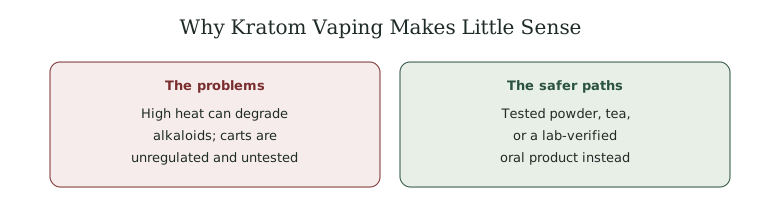
Kratom vaping inhales a vaporized concentrate, and it is a format built on borrowed familiarity rather than sound evidence. High heat can degrade the alkaloids the method is meant to deliver, and the cartridges are overwhelmingly unregulated and untested, so you cannot verify their content, purity, or safety. The category exists because vaping is popular for other substances, not because it is a well-founded way to take kratom. Since every benefit vaping claims is available more safely through tested oral formats, most consumers should approach kratom vapes with real caution and reach for a lab-verified powder, tea, or oral product instead.
Frequently Asked Questions
Is kratom vaping safe?
It carries meaningful concerns. High heat can degrade kratom's alkaloids, and the cartridges are overwhelmingly unregulated and untested, so you cannot verify their content or purity. Tested oral formats are safer.
Does vaping destroy kratom's alkaloids?
It may degrade or alter them. Research shows kratom alkaloid stability is temperature-dependent, and vaping temperatures far exceed brewing temperatures, so some active material can be lost or transformed by the heat.
What is a safer alternative to vaping kratom?
Every goal vaping claims has a tested oral alternative. Shots or tinctures give fast onset, powder gives control and transparency, and capsules or pouches give portability, all without inhaling an untested concentrate.