
Kratom and Sleep: An Honest Review of What We Actually Know
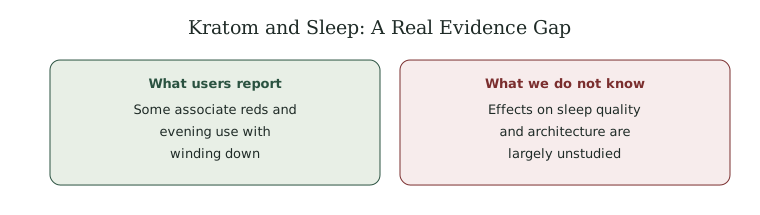
Kratom and sleep is one of the least-studied topics in an already under-researched field, and this page approaches it with the honesty that gap demands. Some users associate kratom, especially red-vein strains taken in the evening, with winding down. But the controlled research on kratom's actual effects on sleep quality and sleep architecture is close to nonexistent, which means the honest answer to most sleep questions is that we do not know. This page lays out what limited evidence exists and, more importantly, what does not.
The State of the Evidence
The most honest thing to say about kratom and sleep is that the research is minimal. There are no substantial clinical trials examining how kratom affects sleep onset, sleep quality, or the stages of sleep. What exists is user report and inference from kratom's broader calming reputation. This is a genuine evidence gap, not a detail. Many products and articles will imply kratom helps sleep, but that implication rests on reputation and the overlap with relaxation, not on studies measuring sleep itself. Ground your serving approach in the kratom dosage guide and keep expectations calibrated to how little is actually known.
The Red Vein and Evening Association
The user-reported connection between kratom and sleep runs mostly through red-vein strains. Because reds carry the strongest calming, evening-leaning reputation, covered in the red vein kratom guide, they are the strains people most often associate with winding down at night. This is survey-based reputation extended toward sleep, not evidence that reds improve sleep. The broader relaxation reputation is examined in kratom relaxation research. The honest read is that reds are where users point for evening calm, but calm before bed is not the same as improved sleep, and no strain is established as a sleep aid.
The Sleep-Architecture Unknown
One specific and important unknown deserves emphasis. Even if kratom helps someone feel relaxed before bed, its effect on sleep architecture, the natural cycling through light, deep, and REM sleep, is essentially unstudied. Many substances that make people feel drowsy actually disrupt the quality and structure of sleep, reducing restorative deep and REM stages even while shortening the time to fall asleep. Whether kratom does this is unknown. This matters because feeling sleepy and sleeping well are different things, and a substance that delivers the first while harming the second is a poor sleep choice. The absence of research here is a real reason for caution, not reassurance.
Frequency, Dependence, and Sleep
Using kratom regularly for sleep raises a specific concern worth naming. Because frequent use can lead to tolerance and dependence, covered in kratom frequency and tolerance, relying on kratom nightly to sleep is exactly the kind of frequent, habitual use most associated with those risks. Furthermore, sleep disturbance is itself a commonly reported kratom withdrawal symptom, which creates a potential cycle where stopping nightly use worsens the very sleep problem it was meant to address. This makes nightly kratom for sleep a particularly cautious proposition, distinct from occasional evening use.
What This Means for You
The practical takeaway is honesty about uncertainty. If you are considering kratom for sleep, understand that you are entering one of the least-studied areas of kratom use, that no strain is proven to improve sleep, that the effect on sleep quality is unknown and possibly negative, and that nightly use carries dependence and rebound concerns. For persistent sleep problems, established approaches and a conversation with a doctor are far better founded than an unstudied botanical. Ground the fundamentals in kratom basics. Kratom's evening calming reputation is real as report, but as a sleep solution it rests on almost no evidence.
Better-Founded Approaches to Sleep
Because kratom rests on so little sleep evidence, it is worth noting that far better-founded approaches exist for anyone genuinely struggling with sleep. Consistent sleep and wake times, a cool and dark room, limiting screens and caffeine before bed, and regular daytime activity are all supported by substantial research and carry none of the dependence concerns of a nightly substance. For persistent insomnia, cognitive behavioral therapy for insomnia is a well-studied, first-line approach that addresses the causes rather than masking them. A conversation with a doctor can rule out underlying conditions that no botanical would fix. None of these is as quick or effortless as reaching for a capsule, but all of them rest on real evidence, which is precisely what kratom lacks in this area. The contrast is the point: when established, evidence-based options exist for a problem as important as sleep, choosing an unstudied botanical instead is a hard decision to defend.
The absence of sleep research deserves emphasis because sleep is an area where the gap between reputation and evidence carries real consequences. Poor sleep compounds over time, affecting mood, health, and daily function, so choosing a sleep approach based on almost no evidence is a meaningful gamble. Many people reach for whatever makes them feel drowsy, but drowsiness and restorative sleep are genuinely different, and a substance that delivers the first while quietly degrading the second can leave someone worse rested despite falling asleep faster. Because no research measures what kratom actually does to sleep architecture, anyone using it for sleep is essentially running an uncontrolled experiment on themselves, without the feedback that would reveal whether their sleep quality is improving or declining. This is why the honest guidance points away from kratom as a sleep solution and toward established, evidence-based approaches. Sleep is too important, and too easily harmed by the wrong intervention, to entrust to a botanical whose effects on it have never been properly measured. Until real sleep research on kratom exists, honesty means admitting the question is genuinely open. The most responsible thing a resource can do here is decline to pretend otherwise, and point you toward approaches that rest on real evidence.
The Bottom Line on Kratom and Sleep
Kratom and sleep is among the least-researched topics in the field, and honesty requires saying so plainly. Some users associate red-vein strains and evening use with winding down, but there are no substantial trials on kratom's effects on sleep quality or sleep architecture, and feeling drowsy is not the same as sleeping well. Nightly use for sleep also intersects with the tolerance, dependence, and rebound-insomnia concerns that come with frequent use. The reputation for evening calm is real as user report, but as a sleep aid kratom rests on almost no evidence, and persistent sleep problems are better addressed with established approaches and a doctor's input.
Frequently Asked Questions
Does kratom help you sleep?
There is almost no research on kratom's effects on sleep quality or architecture. Some users associate red strains with evening calm, but feeling relaxed before bed is not the same as sleeping well, and no strain is proven as a sleep aid.
Is it safe to take kratom every night for sleep?
It raises real concerns. Nightly use is the frequent, habitual pattern most associated with tolerance and dependence, and sleep disturbance is itself a reported withdrawal symptom, which can create a cycle.
Which kratom is best for sleep?
No strain is established as a sleep aid. Users most often associate red-vein strains with evening calm, but this is survey-based reputation extended toward sleep, not evidence that any strain improves sleep.