
Growing Kratom: Where It Grows — and Whether You Can
Kratom grows naturally in the hot, humid, equatorial climate of Southeast Asia, and that single fact explains almost everything about its supply. The tree, Mitragyna speciosa, needs tropical warmth, high humidity, rich soil, and years of time to produce potent leaf. Those requirements are hard to fake outside the tropics. This is why nearly all commercial kratom on the US market comes from Indonesia, and why "homegrown" kratom is more hobby than harvest for almost everyone. Understanding where the leaf comes from tells you a lot about price, freshness, and quality.
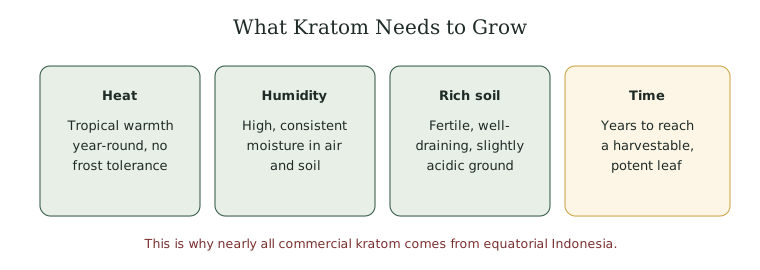
What Kratom Needs to Grow
Kratom is a tropical tree with tropical demands. It needs consistent warmth with no frost, since cold kills it quickly. It needs high humidity, the kind found near the equator, not in most of the continental United States. It needs fertile, well-draining, slightly acidic soil. And it needs years to mature into a tree whose leaves carry meaningful alkaloid content. Ground the botany in the kratom plant. These are not casual houseplant conditions. They are the specific climate of equatorial Southeast Asia, which is exactly where the plant evolved.
The US-Growing Reality Check
Growing kratom in the United States is possible in theory and impractical in reality for most people. A dedicated hobbyist in a warm, humid pocket of Florida or Hawaii, with a greenhouse and patience, can keep a kratom tree alive. What almost no one can do at home is produce the volume, consistency, and alkaloid potency of commercial tropical leaf. The tree takes years, the climate has to be maintained, and a few backyard leaves will never match a professionally harvested crop. So while the occasional Florida greenhouse grows kratom as a novelty, homegrown kratom is not a practical supply source. It is a gardening project, not a substitute for tested product.
The Indonesia Supply Chain
Indonesia dominates the kratom trade, and understanding why clarifies the whole market. The island of Borneo, and Indonesian Borneo in particular, has the ideal climate and established growing regions. The overwhelming majority of kratom imported into the United States originates there, regardless of the "Bali," "Thai," or "Malay" names on the packaging. Those names are style labels, not always true origins. This concentration of supply in one country means that Indonesian export rules, weather, and harvest conditions ripple through to US prices and availability. Those developments are tracked in kratom supply news, since a policy shift or a bad season abroad shows up on American shelves.
How Supply Affects You
The supply chain is not abstract. It touches what you pay and what you receive. Because kratom crosses an ocean, freshness depends on how quickly leaf moves from harvest to shelf, and alkaloids degrade over time. Because supply concentrates in one region, disruptions there tighten availability and raise prices everywhere. Because the leaf is imported, testing matters even more, since you cannot inspect a farm across the world. This is the practical reason a certificate of analysis is non-negotiable. The lab result is your window into a product whose origin you will never see firsthand.
Legality of Growing Kratom
Whether you can legally grow kratom depends entirely on your state. In states where kratom is legal, growing the plant generally follows the same rules as growing any legal plant. In the handful of states that ban kratom, that prohibition extends to the plant itself, making cultivation illegal along with possession. Before attempting to grow kratom anywhere, check your state's status on the kratom legality map. The legal patchwork that governs buying kratom governs growing it too, and a legal plant in one state is contraband across a nearby border.
Seeds and Cuttings, Honestly
Anyone determined to grow kratom faces a sourcing problem worth knowing about up front. Kratom seeds lose viability extremely fast, often within days of harvest, so mail-ordered seeds frequently arrive dead and never sprout. Live cuttings and established seedlings have far better odds but are harder to find and more expensive. The honest guidance is to set expectations low. Many people who try to grow kratom from seed get nothing for their money. Those who succeed usually start from a living plant, provide near-tropical conditions, and wait years. It is a genuine horticultural challenge, not a quick way to skip buying tested leaf.
Why Origin Affects Quality
Where and how kratom is grown shapes the leaf that reaches you, which is why origin is more than trivia. Growing conditions, harvest timing, and the age of the leaf all influence alkaloid content. A tree grown in ideal equatorial conditions and harvested at the right maturity yields more consistent, potent leaf than a stressed plant grown at the edge of its tolerable climate. This is part of why homegrown and out-of-region kratom rarely matches commercial tropical supply, and why professional growing regions dominate the trade. It is also why two products with the same strain name can differ, since the growing and processing behind them varies. The consumer cannot inspect a farm across the world, so the certificate of analysis becomes the stand-in for everything origin would otherwise tell you. A lab result measures the actual leaf you are buying, closing the gap between an unseeable farm and the product in your hands. That single document does more to protect a buyer than any origin story printed on a label ever could. The farm you cannot see is exactly why the lab result you can read matters so much.
The Bottom Line on Growing Kratom
Kratom is a demanding tropical tree, and its needs explain the entire supply picture. It requires equatorial heat, humidity, rich soil, and years of growth, which is why nearly all commercial kratom comes from Indonesia rather than a US backyard. Homegrown kratom is a difficult hobby, not a practical supply, and seeds rarely survive shipping. The concentration of supply in one region means foreign harvests and export rules shape American prices and availability, and it makes lab testing essential for a product you can never inspect at the source. Whether growing is even legal depends on your state. For nearly everyone, the realistic path to kratom is a tested product from a trusted vendor, not a tree on the windowsill. See how it all connects in the kratom science resource.
Frequently Asked Questions
Can you grow kratom in the United States?
Only with difficulty. A hobbyist in a warm, humid area like Florida or Hawaii with a greenhouse can keep a tree alive, but producing the volume and potency of commercial tropical leaf at home is impractical.
Where does most kratom come from?
Indonesia, especially Indonesian Borneo, which has the ideal climate. Most kratom imported into the US originates there regardless of the Bali, Thai, or Malay names on the package.
Why do kratom seeds rarely grow?
Kratom seeds lose viability within days of harvest, so mail-ordered seeds often arrive dead. Live cuttings and established seedlings have far better odds but are harder to find.