
Kratom Potentiators: What the Evidence Supports — and What It Does Not
Kratom potentiators are substances people take alongside kratom to make its effects stronger or longer-lasting, from grapefruit juice to turmeric to magnesium. The community regards them as a way to stretch a supply or boost an effect, but the honest picture is more complicated. Some potentiators work by slowing how fast your body breaks kratom down, which is not the harmless trick it sounds like. Understanding the actual mechanisms, and where they cross from clever into risky, is essential before using any potentiator.
What Potentiators Claim to Do
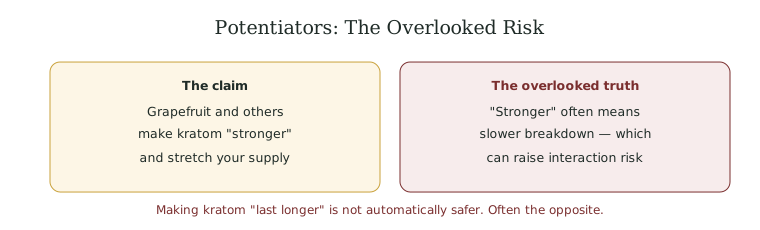
Potentiators are marketed and discussed as effect-boosters. The pitch is that adding a certain food or supplement makes a given amount of kratom feel stronger or last longer, letting you use less. Ground your serving approach first in the kratom dosage guide. The appeal is obvious, both for effect and for economy. But the phrase "makes it stronger" hides different mechanisms, and some of those mechanisms carry real safety implications that the enthusiastic framing tends to skip. Each common potentiator deserves examination on its own terms.
Grapefruit and CYP450 Inhibition
Grapefruit is the potentiator that best illustrates the hidden risk. Grapefruit inhibits certain liver enzymes in the cytochrome P450 family, which are the same enzymes that metabolize kratom's alkaloids. By slowing that metabolism, grapefruit can make kratom's effects feel stronger and last longer, since the alkaloids linger. Research confirms kratom itself interacts with these enzymes. In a 2023 review in Drug Metabolism and Disposition, Rakshit Tanna and colleagues identified kratom as a modulator of CYP2D6 and CYP3A enzyme activity, the very pathways involved in many drug interactions (Tanna et al., 2023). The problem is that slowing kratom's breakdown also affects how other medications are cleared. Stacking grapefruit onto kratom is not simply a strength boost. It is a metabolic interference that can raise the risk of interactions with any other substance those enzymes handle.
Turmeric and Other Claimed Potentiators
Turmeric is another commonly cited potentiator, claimed to extend or intensify kratom's effects. The evidence here is thinner than for grapefruit, and the proposed mechanisms are less established. Turmeric and its compound curcumin have their own metabolic effects, so the general caution about interfering with kratom's breakdown applies, even if the effect is weaker or less certain. The honest read is that turmeric's potentiating effect is more anecdotal than demonstrated, and like grapefruit, any real effect likely comes from metabolic interference rather than a benign boost. Approach these claims with the same caution you would apply to grapefruit.
Magnesium and Tolerance Claims
Magnesium occupies a different niche in potentiator lore, often claimed to reduce or reset tolerance rather than boost strength directly. The idea is that magnesium's action on certain receptors might slow tolerance buildup. The evidence for this specific claim is weak and largely theoretical. Magnesium is a common supplement with its own general health uses, and taking a reasonable amount is not dangerous for most people, but expecting it to meaningfully reset kratom tolerance is not well supported. If tolerance is your concern, the reliable lever is frequency, covered in how often to take kratom, not a magnesium supplement.
Why "Stronger" Can Mean "Riskier"
The core insight about potentiators is that the mechanism matters more than the marketing. When a potentiator works by slowing your body's breakdown of kratom, "stronger and longer" is really "cleared more slowly," and slower clearance can compound with other substances your liver is processing. This is why the empty-stomach and interaction considerations matter, covered in kratom on an empty stomach. A potentiator that stretches your supply by interfering with metabolism is not giving you something for free. It is changing your pharmacology in ways that raise the stakes, especially if you take any medication.
How to Approach Potentiators Safely
If you consider potentiators at all, do so with genuine caution. First, understand that metabolic potentiators like grapefruit can affect how other medications are cleared, so they are especially risky for anyone on prescription drugs. Secondly, recognize that a metabolic potentiator does not add safety, it subtracts a natural check on how long kratom lingers. Thirdly, consult a pharmacist before combining kratom, a potentiator, and any medication, since the interaction risk is real. Ground the chemistry in mitragynine and kratom alkaloids and the mixing question in what to mix kratom with. For a related botanical-combination question, see ashwagandha and kratom examined, and ground the fundamentals in kratom basics. The safest approach for most people is to skip metabolic potentiators entirely and manage effect through serving and frequency instead. That simple discipline delivers what potentiators promise without the metabolic gamble they quietly introduce. For most people, most of the time, the plant on its own terms is exactly enough.
The Better Alternative to Potentiators
The honest alternative to potentiators is almost anticlimactic: manage kratom's effects through the two levers you already control, serving size and frequency. If you want a stronger effect, a modestly larger weighed serving does it directly, without introducing a metabolic interaction. If you want to stretch a supply, using kratom less often accomplishes that while also protecting you from tolerance and dependence. Neither of these levers requires adding a second substance to your body, and neither carries the interaction risk that metabolic potentiators do. This is why experienced, cautious consumers tend to skip potentiators entirely. They offer a small, uncertain benefit in exchange for a real and often overlooked risk, especially for anyone taking medication. The plant works well enough on its own terms when you respect serving and frequency, and reaching for grapefruit or turmeric to squeeze out more is usually solving a problem that better serving discipline would have prevented in the first place. Simplicity, here, is also the safer path.
The Bottom Line on Kratom Potentiators
Kratom potentiators promise stronger, longer effects, but the honest picture is that the most effective ones work by slowing your body's metabolism of kratom, which is not a free boost. Grapefruit inhibits the same liver enzymes that clear kratom and many medications, so it raises interaction risk rather than simply adding strength. Turmeric's potentiating claims are thinner, and magnesium's tolerance claims are weakly supported. The safest approach is to manage kratom's effects through serving size and frequency rather than metabolic potentiators, and to consult a pharmacist before combining any potentiator with kratom and medication. "Stronger" is not the same as "safer," and with potentiators it is often the opposite.
Frequently Asked Questions
Does grapefruit make kratom stronger?
Yes, but by slowing metabolism, not by a free boost. Grapefruit inhibits liver enzymes that clear kratom and many medications, so it makes effects linger while also raising the risk of drug interactions.
Is turmeric a good kratom potentiator?
The evidence is thin and more anecdotal than demonstrated. Any real effect likely comes from metabolic interference, so approach turmeric with the same caution as grapefruit rather than as a benign boost.
Does magnesium reset kratom tolerance?
The claim is weakly supported and largely theoretical. If tolerance is your concern, the reliable lever is using kratom less frequently, not a magnesium supplement.