
Kratom Drinks & Seltzers: The Ready-to-Drink Category Explained
Kratom drinks and seltzers are ready-to-drink beverages containing kratom, from carbonated seltzers to energy-style drinks to powdered mixes. They package kratom as a familiar, flavored beverage, trading the bitterness of powder for convenience and social appeal. The category is growing fast, and it carries specific things to watch: how the milligram content is labeled, whether caffeine has been added, and what else is in the can. Mapping the category and reading these labels honestly is what separates a pleasant social drink from an unpredictable one.
The Category Map
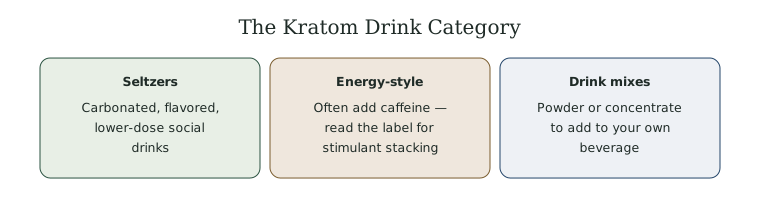
Kratom beverages fall into a few groups. Seltzers are carbonated, flavored, usually lower-dose drinks marketed as social alternatives. Energy-style drinks pair kratom with other stimulating ingredients, often caffeine. Drink mixes are powders or concentrates you add to your own beverage. Related products include shots, covered in kratom shots explained, and the kava-kratom combination drinks covered in kava and kratom drinks. Each format packages kratom differently, but all share the same core questions about content and labeling.
Milligram Labeling in Beverages
The labeling question is the most important one for drinks. A beverage listing a milligram figure may be stating total extract weight rather than milligrams of mitragynine, exactly as with gummies and pouches. A seltzer that says "45mg" could mean 45 milligrams of extract of unknown strength or 45 milligrams of actual mitragynine, a large difference. Read the label for mitragynine content specifically, and ground your serving target in the kratom dosage guide. A drink is easy to consume quickly, so knowing the actual mitragynine per can matters even more than with a format you take deliberately.
Carbonation and Onset Claims
Some drink marketing claims that carbonation speeds onset, and this deserves a skeptical note. There is little solid evidence that carbonation meaningfully changes how quickly kratom's alkaloids are absorbed. Carbonation affects taste and mouthfeel far more than pharmacology. Regard onset claims tied to bubbles as marketing rather than established fact. What actually governs a drink's effect is the mitragynine content and your own physiology, not whether the beverage fizzes. The fizz is a sensory feature, not a delivery upgrade.
Caffeine-Combo Products, Flagged
The most important safety note for kratom drinks concerns added caffeine. Many energy-style kratom beverages combine kratom with caffeine, which stacks two active substances. Combining a caffeine stimulant with kratom can amplify jitteriness, raise heart rate, or unsettle the stomach for some people, as covered in kratom and caffeine together. Read the ingredient panel specifically for caffeine and other stimulants. If a drink combines them, approach it as stacking two actives and start with less. A beverage that hides its caffeine content in a proprietary energy blend is not giving you what you need to judge it.
Reading the Ingredient Panel
Beyond kratom and possible caffeine, drinks carry sweeteners, flavorings, preservatives, and sometimes other botanicals, so the full ingredient panel matters. Sugar content can be significant in flavored drinks, and other added actives can interact or compound effects. Read the entire panel, not just the front-of-can kratom claim. Ground the fundamentals in kratom basics. A transparent drink lists everything clearly, including the mitragynine content and any stimulants. An opaque one buries the details, which is a reason for caution with a product this easy to drink quickly.
How to Buy Kratom Drinks Well
Buy kratom drinks on the label and the testing. Confirm the milligrams of mitragynine per container, check the ingredient panel for caffeine and other actives, verify a certificate of analysis where available, and compare the price per milligram against powder. A well-labeled, tested kratom seltzer with clear mitragynine content and no hidden stimulants is a reasonable social option. One with a vague milligram figure, hidden caffeine, or no testing is an unpredictable product in an easy-to-overconsume format, which is exactly the combination to avoid.
The Overconsumption Risk
One risk deserves its own emphasis with beverages: the ease of drinking too much. A can of kratom seltzer goes down like any other flavored drink, quickly and without the deliberate pause that weighing powder or counting capsules provides. That smoothness is the appeal, but it is also the danger, because it removes the natural friction that helps people stop at a reasonable serving. Someone who would carefully measure two grams of powder might drink two cans of seltzer without a second thought, ending up with more than intended. The defense is to approach each container as a fixed serving, know its mitragynine content before you drink, and resist the casual second can the same way you would resist a casual second scoop of powder. The format's convenience is real, and so is the responsibility it places on the consumer to drink it deliberately rather than absently.
Who Kratom Drinks Suit
Kratom drinks fit a social, convenience-oriented consumer with the right cautions. They suit someone who wants a familiar, flavored, low-effort way to consume kratom in a social setting, and who is willing to read labels carefully and buy tested products. They fit poorly for cost-conscious buyers, since beverages carry a large markup over powder for the same mitragynine. They also fit poorly for anyone sensitive to caffeine who might not notice it hidden in an energy blend, and poorly for those wanting precise control, since a can delivers a fixed and easily overconsumed amount. The honest summary is that kratom drinks are a pleasant social format for the label-reading, tested-product buyer, and a poor default for anyone optimizing cost, control, or stimulant avoidance. The easy drinkability that makes them appealing is exactly what makes careful label-reading essential.
The Bottom Line on Kratom Drinks and Seltzers
Kratom drinks and seltzers package kratom as familiar, flavored beverages, spanning carbonated seltzers, energy-style drinks, and self-mixed powders. The labeling question is central, since a milligram figure may reflect extract weight rather than mitragynine, and the format's easy drinkability makes knowing the real content important. Carbonation-onset claims are marketing, while added caffeine is a genuine consideration that stacks two active substances. Read the full ingredient panel, confirm the mitragynine content and any stimulants, and verify testing where you can. A transparent, tested kratom drink is a pleasant social option, while an opaque one is an unpredictable serving in a can that goes down fast.
Frequently Asked Questions
What does the milligram figure on a kratom drink mean?
It may state total extract weight rather than milligrams of mitragynine, which are very different. Read the label for mitragynine content specifically, since a drink is easy to consume quickly.
Does carbonation make kratom work faster?
There is little solid evidence that carbonation meaningfully speeds absorption. It affects taste and mouthfeel more than pharmacology, so regard bubble-related onset claims as marketing rather than fact.
Are kratom energy drinks with caffeine safe?
They stack two active substances. Combining caffeine with kratom can amplify jitteriness, heart rate, or stomach upset for some. Read the panel for caffeine, and if present, start with less.