
Kava & Kratom Drinks: Mixing Two Botanicals — Facts First
Kava and kratom drinks are a single beverage category built on two different plants. Kratom comes from Mitragyna speciosa, a Southeast Asian tree in the coffee family. Kava comes from Piper methysticum, a South Pacific shrub in the pepper family. They work through different chemistry, yet they share the same menu at kava bars and the same shelf in many stores. That shared shelf causes real confusion. This page keeps the two straight and covers the drink formats honestly, including the question everyone asks about mixing them.
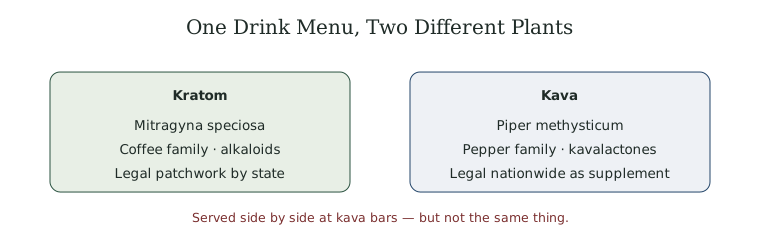
Two Plants, One Menu
The core fact to hold onto is that kava and kratom are not variations of one thing. Kratom's effects trace to alkaloids like mitragynine. Kava's trace to compounds called kavalactones, which act on the GABA system. The full comparison lives in kratom vs kava compared. They appear together because both are botanical relaxation drinks with overlapping social settings, not because they are chemically related. Reading a kava bar menu with that distinction in mind clears up a lot of confusion.
How Kava Bars Serve Them
Kava bars serve both as drinks, and the presentation blurs the line. Kava is typically served as a traditional earthy beverage in a coconut shell. Kratom appears as tea, as a shot, or mixed into a flavored drink. Some bars offer combination drinks that put both in one cup. The formats are covered across kratom drinks and seltzers and kratom shots explained. The important consumer habit is to know which plant is in your cup, in what amount, before you drink it.
The Mixing Question, Honestly
People ask whether kava and kratom can safely be combined, and the honest answer is to be cautious. Both plants can influence how the liver processes other substances. Kava's central safety debate is liver-related. After several case reports of liver injury in the early 2000s, kava was pulled from some European and Canadian markets. Later analysis complicated that picture. In a 2004 review in Toxicology Letters, Dennis Clouatre examined 78 reported cases and found only a handful were probably linked to kavalactones alone, with many involving other substances taken at the same time (Clouatre, 2004). That unresolved liver question is reason enough to combine carefully, and to avoid stacking either plant with alcohol.
What the Kava Research Adds
Kava has a real clinical record, and it is worth reporting accurately rather than dismissing. Multiple randomized trials have tested kava for anxiety with mixed results. A 2013 randomized controlled trial in the Journal of Clinical Psychopharmacology by Jerome Sarris and colleagues found kava reduced anxiety scores more than placebo (Sarris et al., 2013), while a larger 2019 trial by the same group found no significant advantage over placebo across 16 weeks (Sarris et al., 2019). The evidence is genuine but unsettled. Neither plant is an approved product for any condition, and no drink guarantees any effect.
"Feel Free" and Tonic Drinks Decoded
A wave of branded tonics now blends kava and kratom into ready-to-drink bottles, marketed as smooth social alternatives. These products decode simply once you know the two-plant framework. Read the label for two things: which plants are present, and in what amounts. A tonic that lists kavalactones and mitragynine figures is being straight with you. One that hides behind a "proprietary botanical blend" is not. Apply the same serving discipline you would to any concentrated product, following the kratom dosage guide, and remember that a pleasant flavor does nothing to reduce the amount of active compound in the bottle.
How to Approach These Drinks
Approach kava and kratom drinks with a few clear habits. First, know which plant you are drinking and in what amount. Secondly, start low, especially with combination products, since you are managing two active botanicals at once. Thirdly, avoid alcohol alongside either, given the shared liver considerations. Fourthly, favor products that print real figures over those hiding behind blend names. Ground the basics in the kratom plant if the category is new. When the evidence on combinations is thin, the responsible move is caution, not confidence, and a pharmacist's input is wise before mixing either with medication.
Reading a Tonic Label
The branded ready-to-drink tonics deserve one more practical note, since they are where most people first meet this category outside a kava bar. A trustworthy tonic label does three things. It names both plants clearly, so you know whether you are drinking kava, kratom, or both. It lists the amounts, ideally kavalactones for the kava portion and mitragynine for the kratom portion, so you can gauge strength. And it provides or links to a certificate of analysis, so the numbers are verifiable rather than asserted. A label that does all three is being honest with you. A label that hides behind a proprietary blend name, omits the amounts, or offers no testing is asking you to trust it blindly, which is never wise with two active botanicals in one bottle.
Who These Drinks Suit
Kava and kratom drinks fit a social, exploratory kind of consumer, with clear caveats. They suit someone curious about botanical relaxation drinks in a social setting like a kava bar, who wants to try the category with a bartender's guidance. They fit poorly for anyone taking medication that interacts with the liver, since both plants carry liver-related considerations, and poorly for anyone who plans to combine them with alcohol. They also serve cost-conscious buyers poorly, since bar-served drinks and branded tonics carry a significant markup over plain powder. The honest summary is that these drinks are an enjoyable social format for the informed, cautious consumer, and a poor default for anyone managing medications or seeking value.
The Bottom Line on Kava and Kratom Drinks
Kava and kratom drinks put two different plants on one menu, and clarity is the whole game. Kava has a real if mixed clinical record and an unresolved liver debate. Kratom rests on survey evidence and carries its own tolerance and interaction considerations. Combination drinks stack both, which is a reason for extra care rather than a reason for alarm. Know what is in your cup, start low, skip the alcohol, and favor honest labels. Done that way, these drinks are a manageable part of the botanical beverage world. Done blindly, they are two active plants consumed as if they were flavored water.
Frequently Asked Questions
Are kava and kratom the same thing?
No. Kratom is Mitragyna speciosa from the coffee family, and kava is Piper methysticum from the pepper family. They share a menu at kava bars but work through different chemistry.
Is it safe to mix kava and kratom?
Be cautious. Both can affect how the liver processes other substances, and kava carries an unresolved liver-safety debate. Start low, avoid alcohol, and consult a pharmacist before combining either with medication.
What is in a Feel Free-style tonic?
These branded tonics blend kava and kratom into one bottle. Read the label for which plants are present and in what amounts, and favor products that print real figures over proprietary blend names.