
Kratom vs Kava: Two Different Plants — One Honest Comparison
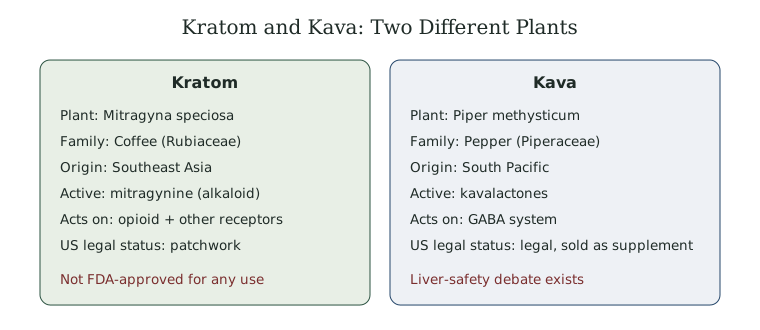
Kratom and kava are two different plants that often get shelved together. They come from different plant families, grow on opposite sides of the world, and work through different chemistry. Kratom is Mitragyna speciosa, a Southeast Asian tree in the coffee family. Kava is Piper methysticum, a South Pacific shrub in the pepper family. The one honest correction to make up front: they are not interchangeable, and they are not the same class of thing. This page compares them fairly, on the evidence.
Different Plants, Different Chemistry
The active compounds tell the clearest story. Kratom's effects trace mainly to mitragynine, an alkaloid that interacts with the body's opioid receptors as a partial agonist. Kava's effects trace to kavalactones, a group of compounds that act on the GABA system, the same broad pathway many calming agents touch. These are separate mechanisms. Understanding kratom's side starts with mitragynine and kratom alkaloids, part of the broader kratom science resource. The takeaway is that comparing them is like comparing two tools, not two brands of the same tool.
What the Research Actually Shows
Kava has the deeper clinical record of the two, and it is worth reporting accurately. Multiple randomized trials have tested kava for anxiety, with mixed results. On the positive side, a 2013 randomized controlled trial in the Journal of Clinical Psychopharmacology by Jerome Sarris and colleagues found kava reduced anxiety scores more than placebo in people with generalized anxiety disorder (Sarris et al., 2013). On the other side, a larger 2019 trial by the same research group in the Australian and New Zealand Journal of Psychiatry found no significant advantage over placebo across 16 weeks (Sarris et al., 2019). The evidence for kava is real but unsettled. Kratom, by contrast, has almost no controlled trial data on effects at all — its record is survey-based, as covered in the kratom dosage guide. Neither plant is an approved treatment for anything.
The Feeling People Describe
User reports, not clinical claims, are where the two plants get compared most. People who use kava describe a calm, sociable, clear-headed quality, which is why kava bars serve it as a relaxing drink. People who use kratom describe a wider range that shifts with the amount taken. These are self-reports, and this site treats them as exactly that. The honest framing matters here more than anywhere. What users describe is not the same as what a trial has proven, and no strain or serving guarantees any feeling.
Safety, Compared Honestly
Both plants carry safety questions, and they are different questions. Kava's central debate is liver safety. After several case reports of liver injury, kava was pulled from some European and Canadian markets in the early 2000s. Later analysis complicated that picture. In a 2004 review in Toxicology Letters, Dennis Clouatre examined 78 reported cases and found only a handful were probably linked to kavalactones alone, with many involving other substances taken at the same time (Clouatre, 2004). The liver question remains genuinely unresolved. Kratom's safety questions center more on tolerance and dependence with frequent use, and on interactions. Both plants can affect how the liver processes other drugs, so combining either with prescription medication deserves a pharmacist's input.
The Combination Question
People ask whether kratom and kava can be mixed, often because kava bars serve both. The cautious answer is to treat any combination carefully. Both plants influence liver enzyme systems, and stacking two substances that do so raises the odds of an unwanted interaction, especially alongside alcohol or medication. The drink-format version of this question is covered in kava and kratom drinks. When the evidence is thin, the responsible move is caution, not confidence.
Which Fits Which Person
There is no winner here, only a fit. Kava is legal nationwide, sold openly as a supplement, and backed by a real if mixed clinical record for short-term use. Kratom occupies a legal patchwork and rests on survey evidence rather than trials. A person drawn to the better-studied option leans kava. A person already researching kratom should first understand what kratom is, then weigh its tolerance and interaction profile with clear eyes. Check your state before buying either on the kratom legality map, and read the honest cost picture in where to buy kratom safely. The best choice is the informed one, and informed means reading the evidence for what it is.
Frequently Asked Questions
Are kratom and kava the same thing?
No. Kratom is Mitragyna speciosa from the coffee family, and kava is Piper methysticum from the pepper family. They come from different regions and work through different chemistry.
Which one is better studied?
Kava has more controlled clinical trials, though results are mixed. Kratom's record is mostly survey-based, with very little controlled trial data on its effects.
Is it safe to mix kratom and kava?
Both plants can affect how the liver processes other substances, so combining them, especially with alcohol or medication, deserves caution and a pharmacist's input.
Is either plant FDA-approved?
No. Neither kratom nor kava is approved by the FDA as a treatment for any condition.