
Trainwreck Kratom: What the Full-Spectrum Blend Really Is
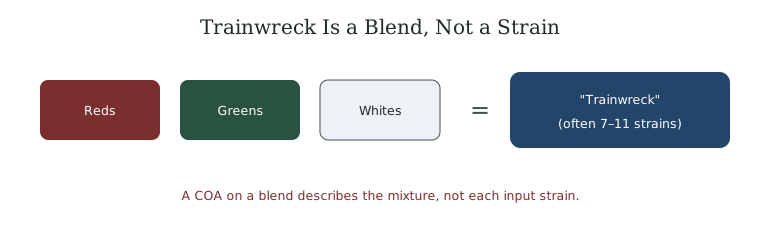
Trainwreck is a kratom blend, not a strain. The name describes a product that mixes many single strains into one — often seven to eleven different reds, greens, and whites combined. There is no Trainwreck tree and no Trainwreck region. The name is a marketing wrapper around a "full spectrum" idea: throw many strains together and sell the mixture as more complete. Knowing it is a blend, not a botanical variety, is the key to buying it wisely.
What "Full Spectrum" Really Means
Trainwreck is sold on the promise of breadth. The pitch is that mixing many strains captures a fuller range of the plant's alkaloids than any single strain. There is a grain of logic there, since different harvests carry slightly different alkaloid mixes. But the pitch outruns the proof. No controlled research shows that a specific blend outperforms a well-chosen single strain. Understand the alkaloid basics in kratom 101 before paying a premium for "spectrum." The concept is real. The marketing built on it usually is not measured.
What Goes Into a Blend
Blend recipes are proprietary and inconsistent. One vendor's Trainwreck may lean red. Another's may lean green. Rainbow and "hippo" variants add more strains or a house twist. Because the recipe changes, so does the experience, which is why blends are harder to judge than single strains. The wider blend category is covered in kratom blends explained. Regard every blend name as a house recipe, not a standard.
Reported Character
User reports on Trainwreck vary as much as the recipes do. Some describe it as balanced. Others find it unpredictable batch to batch. Both make sense given that no two Trainwreck products are certain to match. These are self-reports, not measured effects, and blends make the color-to-effect guessing even less reliable than usual. Start any blend with a small, weighed serving following the kratom dosage guide.
The Blend Verification Problem
Blends complicate lab testing in one important way. A certificate of analysis on a blend measures the finished mixture, not each strain that went into it. You learn the mitragynine percentage of the whole, which is useful, but you cannot verify the recipe behind it. That makes vendor trust matter even more for blends than for single strains. Learn to read the document you do get in how to read a kratom COA.
The Bottom Line on Trainwreck
Trainwreck is a blend with a memorable name, and the honest summary is short. It is not a strain, not a region, and not a botanical fact. It is a house recipe that mixes many strains and sells the mixture under a dramatic label. That is neither good nor bad on its own. A tested Trainwreck from an honest vendor is a legitimate product with real variety to offer. An untested one with nothing but a name behind it is exactly the sort of purchase a careful consumer avoids. Judge it the way you would judge any blend: by the certificate of analysis on the finished mixture and the trustworthiness of the seller. The name is theater. The lab result is the only part that tells the truth.
How to Test a Blend Safely
If a blend interests you, a careful first trial protects you from its main weakness, inconsistency. Buy the smallest quantity offered, since a blend you have not tried may not match your last one. Confirm the certificate of analysis on the finished mixture and read its mitragynine figure, even though it cannot tell you the recipe. Start with a small weighed serving, judging the blend as potentially stronger or weaker than a single strain you know. Keep notes on the specific batch, including any lot number, so a good experience is repeatable and a poor one is a warning. Blends reward caution and punish assumption. A consumer who tests a blend this way keeps the variety a blend offers while limiting the surprise that inconsistency can bring.
The Honest Case For and Against Blends
A fair verdict on Trainwreck holds both sides at once. In favor: a blend can offer variety, and a well-made one from a testing vendor is a legitimate product. Against: a blend sacrifices the consistency and clean verification that make single strains easier to trust. The deciding question is not whether blends are good or bad in the abstract. It is whether a specific blend comes with a certificate of analysis and a vendor who stands behind it. A tested blend from an honest seller is a reasonable purchase. An untested blend with a dramatic name and no lab document is exactly the kind of product this site exists to warn against. The name tells you nothing. The paperwork tells you everything.
Where the Trainwreck Name Came From
The Trainwreck name is pure branding, and its origin says a lot about kratom marketing. A blend needs a memorable label to stand out, and "Trainwreck" is memorable. It implies intensity and a mix of everything at once. That branding instinct is why so many blends carry dramatic names — Rainbow, Hippo, and others follow the same playbook. None of these names describes a botanical fact. They describe a house recipe wearing a marketable label. Recognizing the pattern is half the protection. Once you see that a dramatic blend name is a marketing choice, you stop paying a premium for the drama and start asking for the lab result instead.
Who a Blend Actually Suits
Blends are not a trap for everyone. An experienced consumer who already knows their response to single strains may enjoy the variety a blend offers, and may not mind the batch-to-batch inconsistency. What a blend does not suit is a beginner trying to learn their own baseline. Learning requires consistency, and a blend changes recipe by vendor and sometimes by lot. So the honest advice splits by experience. If you are new, start with a single strain you can verify and repeat. If you are experienced and curious, a blend from a vendor that still publishes a certificate of analysis is a reasonable thing to explore. Either way, the lab result on the finished product remains the one fact you can hold onto.
Blend vs Single Strain
Choose between a blend and a single strain by what you value. A single strain gives predictability and a cleaner lab picture. A blend gives variety and the "spectrum" pitch, at the cost of consistency and verifiability. For a first-time buyer, a single strain is the easier product to judge. Explore the alternatives in types of kratom. The blend is not wrong. It is simply harder to hold accountable.
Frequently Asked Questions
Is Trainwreck a kratom strain?
No. Trainwreck is a blend that combines many single strains, often seven to eleven, into one product. There is no Trainwreck plant or region.
What does full spectrum mean for kratom?
It is a marketing idea that mixing many strains captures a fuller alkaloid range. The concept has some logic, but no controlled research shows a blend outperforms a well-chosen single strain.
Can you verify what is in a Trainwreck blend?
Only partly. A lab result on a blend measures the finished mixture's mitragynine, not each input strain, so the recipe itself cannot be verified from the certificate.