
Red Dragon Kratom: What This Marketing Name Actually Contains
Red Dragon is a branded red kratom name, and the name is pure marketing rather than botany. There is no Dragon region and no Dragon vein. Red Dragon is typically red-vein leaf, often described as a Red Thai or a specific vendor's red blend, sold under a memorable brand name. So Red Dragon is long-dried red leaf wearing a marketing label whose exact contents depend entirely on the vendor. Decoding that is the key to knowing what you are actually buying.
What Red Dragon Kratom Actually Is
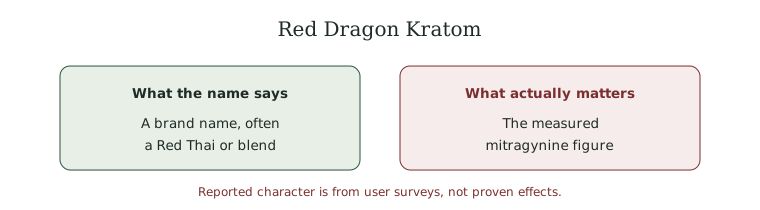
Red Dragon is red-vein leaf sold under a branded name that carries no standardized meaning. Depending on the vendor, it may be a Red Thai, a house red, or a red blend. See the color context in the red vein kratom guide, and since some Red Dragon products are blends, the kratom blends explained is worth reading too. The brand name tells you almost nothing reliable, so the certificate of analysis carries all the weight.
The Reported Character
User surveys describe red dragon as slower-paced and evening-leaning, in line with its vein color. Read that honestly. These descriptions are self-reports, not proven effects, and the reliable evidence for fixed color-to-effect rules is thin. The reputation is useful vocabulary for how the market talks about this product. It is not a promise. Weigh every batch the same way, keep your own notes, and let those notes rather than the reputation guide your choices. Red Dragon reads like other reds in the surveys, but because the branded recipe varies by vendor, its character is less predictable than a plainly named single strain.
Why Branded Names Like Red Dragon Exist
Branded strain names serve the vendor more than the consumer. A memorable name like Red Dragon differentiates a product, builds loyalty, and can command a premium, all without describing anything measurable about the leaf. This is the same pattern seen across the market, where marketing vocabulary sits on top of ordinary leaf. The defense is always the same: read past the brand to the certificate of analysis, and check whether the product is a single strain or a blend so you know what you are dosing.
Serving and Format
Approach red dragon like any red product. Start with a small, weighed serving from the kratom dosage guide and adjust slowly on a later day. Powder gives the most control over serving size and the lowest cost per gram. Capsules trade that control for convenience. Extracts and shots concentrate the leaf and cost more per milligram. Whichever format you choose, the underlying leaf is the same, and the survey-based ranges apply the same way. Because Red Dragon's recipe varies by vendor, regard each vendor's version as a new product and start conservatively.
Powder, Capsules, or Concentrate
Red Dragon Kratom comes in every format, and the format changes the economics more than the leaf. Powder is the cheapest and gives the most control over serving size, which makes it the natural starting point. Capsules cost more and trade that control for convenience and no taste, since a size 00 capsule holds roughly 0.5 to 0.7 grams and a typical serving means three to four of them. Extracts and shots concentrate the leaf and cost the most per milligram of mitragynine, so they suit experienced consumers rather than newcomers. Whatever the format, the underlying leaf is the same, and the serving math traces back to the same survey-based ranges. A format decision is a convenience-and-cost choice layered on top of that foundation, not a change to what the product fundamentally is.
Storing It Well
Storage protects the money you spend on any kratom, red dragon included. The alkaloids degrade with exposure to light, air, moisture, and heat, so a bargain bag loses value if it sits open on a warm shelf for months. Keep the product in a sealed, opaque container away from sunlight and heat. Buy quantities you will actually finish in a reasonable window rather than over-buying to chase a bulk discount that fades along with the leaf. The freshest gram is the one you stored correctly the day it arrived, and good storage is the quiet habit that keeps a tested product performing the way its lab result promised. None of this is complicated. A sealed jar in a cool, dark cupboard covers almost every case, and it costs nothing beyond a moment of attention when your order arrives.
How to Buy Red Dragon Kratom Well
Buy Red Dragon on the lab result, not the brand. Read the mitragynine percentage on the certificate of analysis, confirm the lot number, and check whether the product is a single strain or a blend. The full COA method is in how to read a kratom COA. Ground the fundamentals in kratom basics. A memorable name like Red Dragon is a marketing asset, and only the lab result tells you whether the leaf inside lives up to it.
Who It Suits
Red Dragon Kratom suits the same consumer any red product suits: someone who buys on evidence rather than on names. If you are new, start with powder, buy a modest quantity, verify the certificate of analysis, and keep notes on your own response across a couple of days. If you are experienced, this product is a reasonable option to rotate in, judged the same way, by its lab result rather than its label. The one consumer it does not suit is the buyer chasing a promised effect from a name, because no strain delivers that. Weighed servings, honest notes, and a verified lab result are what make any kratom, including this one, worth buying. Approached with that discipline, this product is neither a magic bullet nor a gamble. It is simply a leaf whose real value lives in the testing, and a buyer who reads the certificate of analysis will always know exactly what they are getting before a single dollar changes hands.
The Bottom Line on Red Dragon Kratom
Red Dragon is a branded red kratom name with no standardized meaning, typically a Red Thai or a vendor's red blend. It reads like other reds in user surveys, but its branded recipe varies, making it less predictable than a plainly named strain. Judge it by its certificate of analysis, check whether it is single-strain or a blend, and read the memorable name as marketing rather than a description of the leaf. When tested, Red Dragon can be a perfectly good red. Untested, it is a name doing the work a lab result should.
Frequently Asked Questions
What is Red Dragon kratom?
Red Dragon is a branded red kratom name with no standardized meaning. It is typically red-vein leaf, often a Red Thai or a vendor's red blend, sold under a memorable marketing label.
Is Red Dragon a specific strain?
Not in any standardized sense. The exact contents depend on the vendor, and some Red Dragon products are blends. Check the certificate of analysis and whether it is single-strain or mixed.
How is Red Dragon different from Red Thai?
Many Red Dragon products are essentially a branded Red Thai. The Dragon name adds marketing rather than a distinct botanical meaning. Compare them by lab result rather than by name.